
Women’s History Month is a time to honor the achievements of women who have shaped the world through their intellect, creativity, and perseverance. Throughout history, women have used writing as a powerful tool to document discoveries, challenge societal norms, and inspire future generations. Whether through literature, scientific papers, or educational texts, their words have left an indelible mark. Among these trailblazers is Maryam Mirzakhani, an Iranian mathematician whose contributions to both academia and mathematical literature continue to influence the field. Her dedication to both problem-solving and the written word showcase the profound impact of intellectual pursuit and the importance of sharing knowledge. This blog, written by students from the International Christian School in Costa Rica, seeks to explore her legacy and the ways in which her work continues to inspire future generations.
Maryam Mirzakhani: The Woman Who Solved the Unsolvable
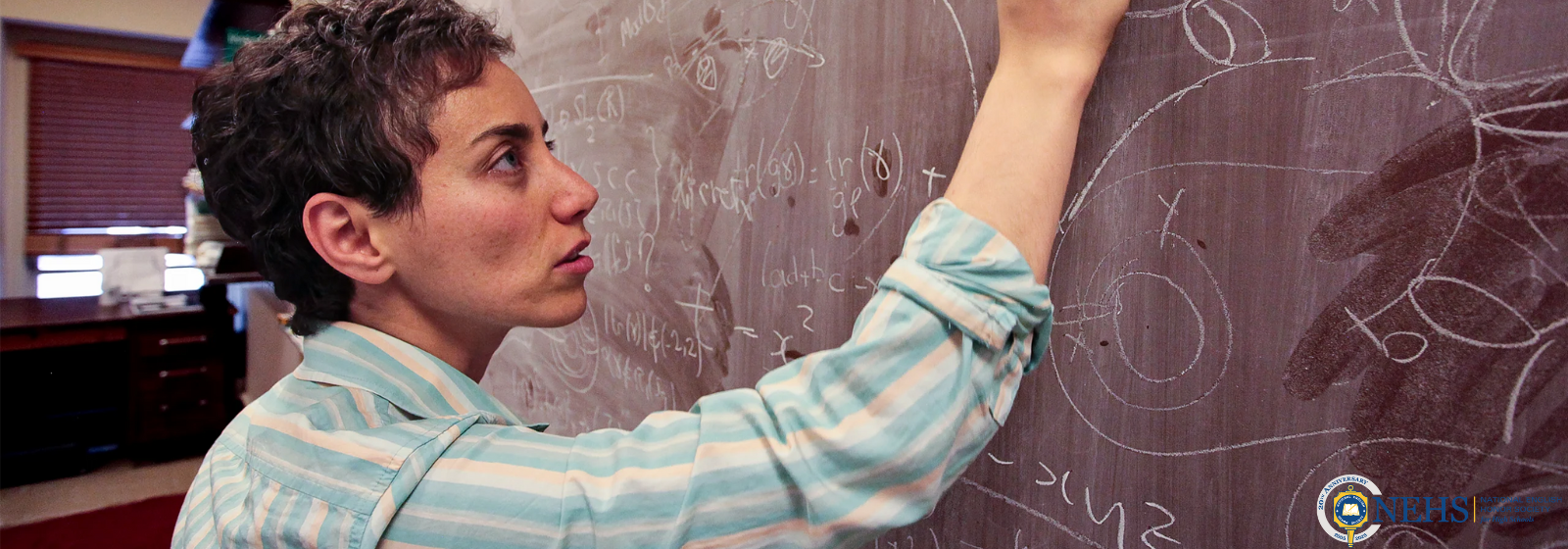
Women’s achievements and contributions to society are celebrated around the world on March 8. This day was originally established by Lenin as a commemoration for women’s movements and efforts during the Russian Revolution in 1917, which affected communities globally. Iranian professor and mathematician, Maryam Mirzakhani, certainly stands out among the hundreds of thousands of women who have prevailed against limiting societal expectations and achieved their dreams.
Born on May 12, 1977, in Tehran, Iran, Mirzakhani was quick to explore her passion for and interest in mathematics. During her junior and senior years of high school, she won the gold medal for mathematics in the Iranian National Olympiad. Interestingly, Mirzakhani did not limit herself to the discipline of mathematics. She was an avid reader and, originally, wanted to become a novelist. To merge these interests, in 1999, she co-authored Elementary Number Theory, Challenging Problems with her colleague Roya Beheshti Zavareh. This book, designed to encourage students to think deeply about mathematical concepts, is a testament to her belief in the power of education and creative problem-solving.
In 2004, Mirzakhani immigrated to the United States to conduct graduate research and later received a PhD at Harvard University. During her time at Harvard, her advisor, Curtis McMullen, proudly stated, “There are mathematicians that are brilliant at posing problems, and mathematicians that are brilliant at solving problems. Maryam is the rare mathematician who excels at both” (McMullen, 2014). Five years later, Mirzakhani began working at Stanford University after a tenure at Princeton University, where she devotedly educated brilliant minds. Beyond her teaching and research, Mirzakhani also contributed to academic literature, publishing numerous papers that explored complex mathematical fields such as Teichmüller theory, hyperbolic geometry, ergodic theory, symplectic geometry, and, most momentously, the theory of moduli spaces of Riemann surfaces. Her ability to link distinct mathematical concepts and develop innovative formulas led to the resolution of long-standing mathematical problems.
In 2014, Mirzakhani became the first woman and first Iranian to be awarded the Fields Medal, the most prestigious honor in mathematics. Upon receiving this recognition, Mirzakhani stated, “This is a great honor. I will be happy if it encourages young female scientists and mathematicians. I am sure there will be many more women winning this kind of award in coming years” (Mirzakhani, 2014). Her words and achievements not only advanced mathematics but also inspired a new generation of women to pursue STEM fields. In 2022, Maryna Viazovska became the second woman to win this award, marking the gradual progress of female representation in mathematics.
On July 14, 2017, Mirzakhani passed away due to breast cancer at the age of forty. However, her legacy continues through institutions dedicated to promoting women in mathematics, such as the Maryam Mirzakhani New Frontiers Prize, the May 12 initiative, and the Mirzakhani Society. Her influence extends beyond her research; her writing, both in books and academic papers, has shaped mathematical thought and provided valuable resources for future scholars. An interesting statistic to reflect on is that in the 1970s, women made up only about eight percent of the STEM field in the United States. By 2019, this number had increased to twenty-nine percent, signaling progress toward greater inclusion (STEM Women, 2021).
Mirzakhani was esteemed as a lifelong learner and is a phenomenal representation of keeping one’s passion ignited. Her contributions to mathematics and literature remain invaluable, and she continues to inspire women worldwide. As we celebrate Women’s History Month, it is important to recognize role models like Mirzakhani, who have changed the world through their dedication and brilliance. Her journey encourages young women to pursue their dreams, no matter the challenges they face. By learning about and honoring women like Mirzakhani, we, as a society, help create a future where more girls feel empowered to explore careers in STEM and contribute wonderful discoveries. Studying the works and writings of Mirzakhani has given us a deeper appreciation of the ways in which knowledge can be shared and preserved, ensuring that her legacy continues to inspire generations to come.
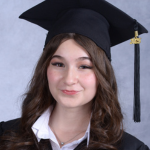
Nicole Fallas Agüero is a 16-year-old student, currently attending International Christian School (ICS), in Heredia, Costa Rica. She was born in the United States, but moved to Costa Rica in October 2023. She enjoys spending time with her friends, creating ceramic sculptures, and reading graphic novels. She joined the first NEHS chapter of Costa Rica at her school in November 2023, as she enjoys and has a profound interest in English literature. As for her role within the chapter, she helps formulate and write for the newsletter published by the Camp Half-Blood Chapter, along with being the Secretary. In the future, she hopes to become a biomedical scientist.
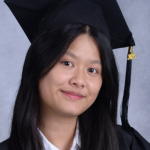
Elina Xiu Yi Feng Wu is a 17-year-old student attending the International Christian School (ICS) in Heredia, Costa Rica. She was born in Costa Rica, went to China at 10 months old, and returned at the age of 6. She enjoys trying out new cooking recipes and learning new languages. In December 2024, she joined the first NEHS chapter in Costa Rica, driven by her love for literature. She writes newsletters published by the Camp Half-Blood Chapter. She hopes to inspire more students to join and share their passion for English literature. Elina dreams of becoming either a chef or a dentist in the future. Whether in the kitchen or a clinic, she hopes to pursue her passion with creativity and dedication.
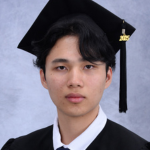
Ivan Xie Zhen is a 17-year-old student attending the International Christian School (ICS) in Heredia, Costa Rica. He was born in Costa Rica, went to China at the age of 8 months, and returned when he was 8. He enjoys sports, learning new things, and spending time with his friends. Furthermore, he joined the first NEHS chapter of Costa Rica at his school in November 2024, since he is interested in English literature. He writes newsletters published by the Camp Half-Blood Chapter. He hopes to encourage more students to appreciate English literature and inspire more students to join. Ivan aspires to become a computer programmer in the future.
National English Honor Society
The National English Honor Society (NEHS), founded and sponsored by Sigma Tau Delta, is the only international organization exclusively for secondary students and faculty who, in the field of English, merit special note for past and current accomplishments. Individual secondary schools are invited to petition for a local chapter, through which individuals may be inducted into Society membership. Immediate benefits of affiliation include academic recognition, scholarship and award eligibility, and opportunities for networking with others who share enthusiasm for, and accomplishment in, the language arts.
America’s first honor society was founded in 1776, but high school students didn’t have access to such organizations for another 150 years. Since then, high school honor societies have been developed in leadership, drama, journalism, French, Spanish, mathematics, the sciences, and in various other fields, but not in English. In 2005, National English Honor Society launched and has been growing steadily since, becoming one of the largest academic societies for secondary schools.
As Joyce Carol Oates writes, “This is the time for which we have been waiting.” Or perhaps it was Shakespeare: “Now is the winter of our discontent made glorious summer . . .” we celebrate English studies through NEHS.
National English Honor Society accepts submissions to our blog, NEHS Museletter, from all membership categories (students, Advisors, and alumni). If you are interested in submitting a blog, please read the Suggested Guidelines on our website. Email any questions and all submissions to: submit@nehsmuseletter.us.
