

This week’s Black History Month blog spotlights the voices of two NEHS members from the BVI Seventh-day Adventist School in the British Virgin Islands, whose reflections connect personal experience with the broader arc of Black history. Arianna Irons and Oke-Oghene Okoro explore themes of identity, resilience, and progress, reminding us that Black history is not only something we study: it is something we continue to live and shape every day.
Arianna’s reflection on Black hair traces a powerful cultural lineage that stretches from ancestral African traditions to contemporary life in the Caribbean, revealing how identity can be carried and shared in the most personal details. Oke-Oghene’s text charts Black achievement through history, honoring the courage and determination of figures who transformed barriers into steppingstones toward a better future. Together, their work embodies the spirit of Black History Month: a celebration of heritage, perseverance, and the voices of a new generation committed to understanding and carrying this history forward.
Rooted in History: A Living History of Black Hair
For as long as I can remember, I have always viewed my hair through the lens of my daily routine. Whether I am slicking it back into a bun for a pointe or jazz performance or am rinsing the salt out after a casual afternoon swim, my hair has always been an integral part of my identity. However, I’ve come to realize that my hair is more than just part of a routine, it is a living symbol for years of culture, a living archive. As authors Ayana Bird and Lori Tharps note in their book Hair Story, to look at the evolution of Black hair is to witness a timeline of people refusing to be erased, where every coil and braid serves as a bridge to our past.
The history of our hair began as a sophisticated cultural language long before it reached Caribbean shores. In pre-colonial West African societies, such as the Wolof, Mende, and Yoruba, hair was a primary means of communication. Intricate patterns were not merely for aesthetics; they indicated a person’s tribe, marital status, wealth, and even their family lineage. To know a person’s hair was to know where they stood in the world. During The Middle Passage, this “architecture” became a desperate tool for survival. Many may not know that enslaved women often braided rice into their hair before being forced onto ships, ensuring they could grow food in an unknown land. Furthermore, in Twisted: The Tangled History of Black Hair Culture, Emma Dabiri notes that in various regions of the Americas, braid patterns like “cornrows” were used as literal maps, the number of braids could signal escape routes or the location of water. They had a duty to survive, and they did so with a silent, resourceful, ingenious honor.
Even today, the journey for hair freedom is still not over. I have personally faced the frustration of school policies that have restricted how I wear my hair, rules that forbid me from having my hair ends out, even though we live in the heart of the Caribbean where our natural hair textures are the very fabric of our cultural heritage. It is a strange contradiction to live in a region that is rooted in African identity while still having to navigate rules that are designed for hiding it. However, this issue remains a constant point of tension, as shown in Elizabeth Acevedo’s Inheritance, proving that even in the 21st century, and within a heritage dominated by African roots, the architecture of our identity is still being policed.
I navigate the world from a dual perspective: I am an artist on the dance floor, but I am also a future pharmaceutical research scientist. I am fascinated by the “chemistry” of my hair, the disulfide bonds that create my curl pattern and the resilience of the keratin structure. Just as I hope to innovate one day in the lab, I see my hair as a biological marvel that has evolved through time to protect me. My hair should not have to be “hidden” to be considered academic. Reclaiming our hair in schools, as DeAndra Miller shares in her creative nonfiction text “Too Black” in the Sigma Tau Delta Rectangle, is the next chapter in our timeline; it is about finally allowing our crowns to exist without apology.
Looking back at Black hair “in time” is to see a history of reclaiming power. From the ancestral plains in Africa to my life today in the Caribbean, our hair remains a symbol or resilience. As I look toward my future, I will carry this history with me. Our hair is our heritage, and every time we embrace its natural beauty, we honor the architecture of our identity.
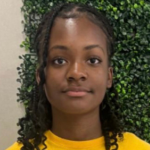
Arianna Irons is an ambitious Form 3 student at the British Virgin Islands Seventh-day Adventist School. As a dedicated member of her local chapter of the National English Honor Society, Arianna is committed to exploring the power of storytelling and cultural history. Beyond her academic studies, she is a multi-talented athlete and artist; she is an avid swimmer and a graceful dancer who has mastered the technical demands of both Jazz and Pointe. Arianna’s disciplined approach to her hobbies reflects her future aspirations, as she plans to enter the field of medicine and innovation as a pharmaceutical research scientist.
Black in Time: The Ascent
When I stop and truly think about the progress that Black people have made throughout history, I find it incredible. There was a time when reading was against the law for us. Frederick Douglass had to teach himself to read in secret because knowledge was seen as dangerous for Black people. Today, Black authors like Toni Morrison and James Baldwin have authored books that are studied in schools around the world. To me, that alone shows how things have changed.
I have learned that Black people were once told where they could sit, stand, live, and learn. Rosa Parks did not refuse to give up her seat just because she was tired. She acted out of courage, knowing her choice could help create change. The Greensboro Four sat at a lunch counter even though they knew they could be attacked or arrested. Their actions might have seemed small at the time, but they helped spark major changes that led to the end of segregation. These moments were not accidents. People refused to accept injustice, and that determination made a difference.
I also see this progress in the legal system. Thurgood Marshall continued taking cases even when the system was not built for someone like him to succeed. Eventually, he became the first Black Supreme Court Justice. That shows me how persistence can break barriers. Indeed, the success of Black History Month has been a story of persistence, as Jarvis Givens notes in I’ll Make Me a World: The 100-Year Journey of Black History Month.
In politics, Shirley Chisholm ran for president at a time when many doubted her because she was both Black and a woman. Years later, Barack Obama became the first Black President of the United States. His presidency showed me that positions once thought to be impossible for us were never truly out of reach—they were simply blocked.
Some heroes were not always in the spotlight, but their impact was just as powerful. Fannie Lou Hamer risked her life so Black people could have the right to vote. Madam C. J. Walker became one of the first self-made female millionaires in America, building her business at a time when Black women had very few opportunities. Her success reminds me that determination can open doors even when society tries to keep them closed.
All this matters to me because it helps me understand resilience. Resilience is not just a word; it is something passed down from generation to generation. I see it when people keep going even when life feels unfair. I see it when we enter spaces where we are not expected and succeed anyway.
We have already achieved so much: David and Yinka Olusoga demonstrate that in Black History for Every Day of the Year. Every protest, speech, business, and discovery shows that we can face whatever challenges come next. I believe we are not starting from the beginning—we are building on a solid foundation created by those who came before us.
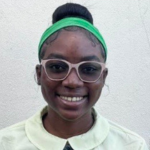
Oke-Oghene Okoro is a student at the BVI Seventh-day Adventist School recognized for consistent academic excellence. She was born in Tortola, British Virgin Islands, and has lived on the island her entire life. From an early age, Oke-Oghene demonstrated a strong dedication to learning. Since entering the BVI SDA School in Form 1, she has maintained Principal’s List status, reflecting her commitment, discipline, and hard work in academics. Oke-Oghene continues to excel in her studies while building a sturdy foundation for her future. Her achievements highlight perseverance and a passion for excellence.
National English Honor Society
The National English Honor Society (NEHS), founded and sponsored by Sigma Tau Delta, is the only international organization exclusively for secondary students and faculty who, in the field of English, merit special note for past and current accomplishments. Individual secondary schools are invited to petition for a local chapter, through which individuals may be inducted into Society membership. Immediate benefits of affiliation include academic recognition, scholarship and award eligibility, and opportunities for networking with others who share enthusiasm for, and accomplishment in, the language arts.
America’s first honor society was founded in 1776, but high school students didn’t have access to such organizations for another 150 years. Since then, high school honor societies have been developed in leadership, drama, journalism, French, Spanish, mathematics, the sciences, and in various other fields, but not in English. In 2005, National English Honor Society launched and has been growing steadily since, becoming one of the largest academic societies for secondary schools.
As Joyce Carol Oates writes, “This is the time for which we have been waiting.” Or perhaps it was Shakespeare: “Now is the winter of our discontent made glorious summer . . .” we celebrate English studies through NEHS.
National English Honor Society accepts submissions to our blog, NEHS Museletter, from all membership categories (students, Advisors, and alumni). If you are interested in submitting a blog, please read the Suggested Guidelines on our website. Email any questions and all submissions to: submit@nehsmuseletter.us.
