

NEHS member Kalyn Reid reflects on the enduring influence of Bram Stoker, the man who redefined gothic horror and gave the world its most iconic vampire. Tracing Stoker’s life from his frail childhood in famine-era Ireland to the creation of Dracula, Kalyn examines how his masterpiece not only transformed literature but also continues to shape our modern imagination. This blog reminds us that through his words, Stoker achieved a kind of immortality: one that still casts its shadow across every vampire story told today.
The Making of a Legend: How Bram Stoker Lives Eternally
Many authors are credited with changing a genre and creating popular characters, but no one has contributed to the horror genre more than Bram Stoker. Bram Stoker was an Irish novelist who wrote the iconic gothic horror novel, Dracula. Not only did he change the popularity of gothic horror but also created the iconic image of the vampires we see in the media today. With Stoker’s novel, the horror genre was repopularized in ways that will stretch far into the foreseeable future.
Stoker was born on November 8, 1847, in Clontarf, Dublin, Ireland, during one of the worst years of the Irish potato famine. Called “Black 47,” Stoker was born the year when millions of his compatriots would die from starvation. The third of seven siblings, he was unable to walk until age seven because of sickness and was often treated with bloodletting. As a result, Bram Stoker would have been no stranger to disease, starvation, and death. Later in life, Stoker would recover and graduate with a degree in mathematics, which seems a strange course of study for one of the world’s most prominent horror writers. While working at Dublin Castle as a civil servant, Stoker was able to meet his idol, actor Sir Henry Irving. He worked as Irving’s clerk, writing letters for him, and accompanying him on American tours. After Irving’s death, Stoker wrote a biography of Irving called, Personal Reminiscences of Henry Irving. The first book Stoker published was The Duties of Clerks of Petty Sessions in Ireland in 1879, a year after Irving’s death. However, his first fiction book, The Snake’s Pass, is a romantic thriller that predates what is, in my opinion, the best horror novel ever written.
Dracula was published in 1897, seven years after his previous book. The style of writing is unique in which the chapters are personal journals and diaries from key characters: Jonathan Harker, Wilhelmina Harker, Dr. John Steward, and Lucy Westerna. Dracula, a Transylvanian vampire, travels to England and starts to terrorize the population. A group led by Dr. Abraham Van Helsing and others are eventually able to put a stop to Dracula’s terror. Even though the book features the defeat of a vampire, the key theme of the novel is modernism, and the inevitable conflict between the ideas of the past and faith in advancing technology.
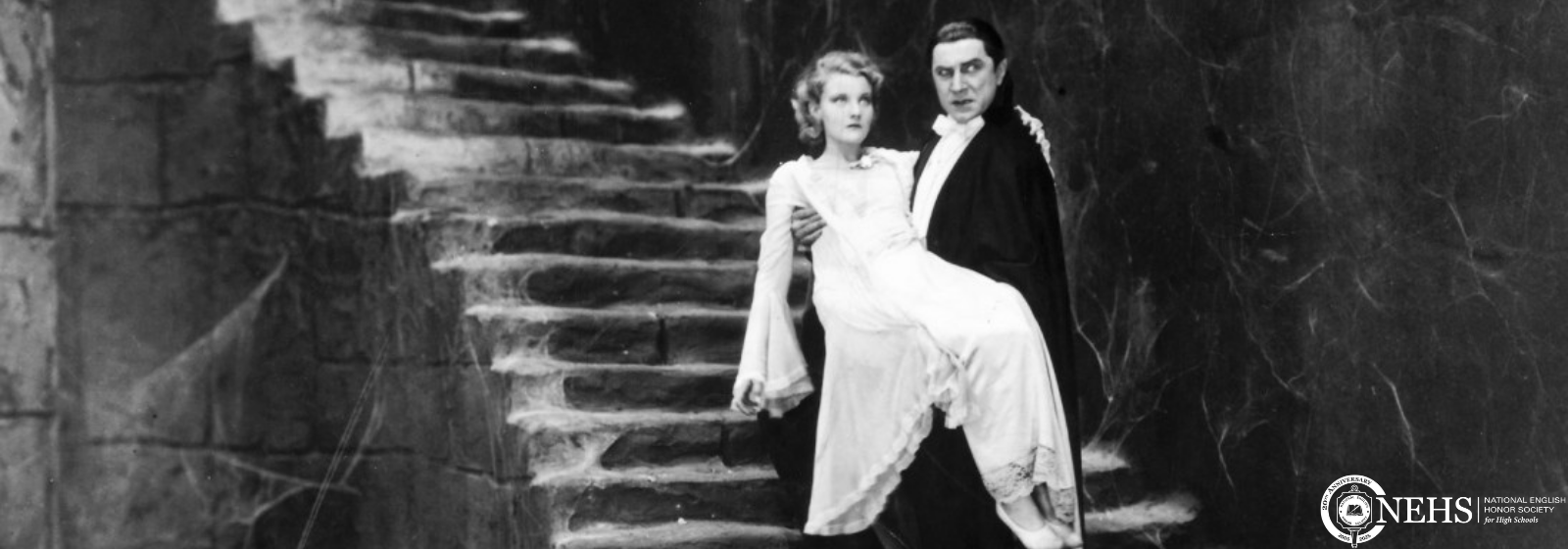
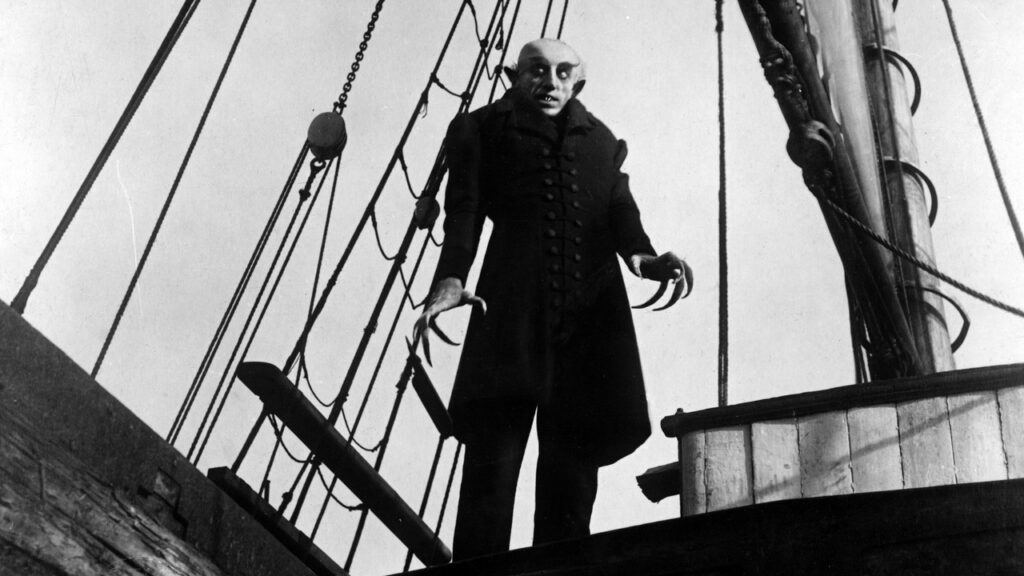
Dracula also set a precedent for the qualities of vampires that have withstood the test of time. Stoker’s ideas are constantly being reimagined. While there are many characteristics now associated with vampire characters at their essence, Stoker’s creation is still present. Since being popularized in the 1931 film Dracula by the famous Hungarian actor Bela Lugosi, it is estimated that there have been over 130 film representations of the famous vampire in some form or another. While Lugosi’s portrayal made Dracula into an attractive European Count less monstrous than Stoker’s original character, it demonstrated the immense power of the vampire. The German movie Nosferatu plagiarized Dracula and the Stoker estate won the lawsuit, but by that time, vampire movies had hit American soil, and there was no reversing the trend. The novel Dracula would later inspire the wildly popular Twilight series by Stephenie Meyer, and the character Count von Count from Sesame Street. Dracula’s influence has reached into all types of media, and whether the vampire is in movies, anime, cartoons, songs, or children’s shows, Dracula is the blueprint for gothic horror.
Stoker would later go on to write seven more books before his death in 1912, but none would be as popular as Dracula. Stoker was able to contribute to a genre in such a way that his work would become immortal. For many, Stoker may merely be a name on a famous book, but to me, he was someone who became immortal through his writing. For me, Bram Stoker is my Henry Irving. I look up to him not only as a writer, but as an example for being able to achieve far after death.

Kalyn Reid is an African American senior at Belleville East High School in Belleville, IL, and she is the acting Treasurer of the Literary Lancers, her school’s chapter of NEHS. She always had a love for reading, which grew as she discovered classical literature. Whenever she is not rereading Dante’s Inferno or A Streetcar Named Desire, she enjoys watching sports, building Legos, and playing video games. Kalyn plans to get through senior year to attend college in pursuit of a mechanical engineering degree.
National English Honor Society
The National English Honor Society (NEHS), founded and sponsored by Sigma Tau Delta, is the only international organization exclusively for secondary students and faculty who, in the field of English, merit special note for past and current accomplishments. Individual secondary schools are invited to petition for a local chapter, through which individuals may be inducted into Society membership. Immediate benefits of affiliation include academic recognition, scholarship and award eligibility, and opportunities for networking with others who share enthusiasm for, and accomplishment in, the language arts.
America’s first honor society was founded in 1776, but high school students didn’t have access to such organizations for another 150 years. Since then, high school honor societies have been developed in leadership, drama, journalism, French, Spanish, mathematics, the sciences, and in various other fields, but not in English. In 2005, National English Honor Society launched and has been growing steadily since, becoming one of the largest academic societies for secondary schools.
As Joyce Carol Oates writes, “This is the time for which we have been waiting.” Or perhaps it was Shakespeare: “Now is the winter of our discontent made glorious summer . . .” we celebrate English studies through NEHS.
National English Honor Society accepts submissions to our blog, NEHS Museletter, from all membership categories (students, Advisors, and alumni). If you are interested in submitting a blog, please read the Suggested Guidelines on our website. Email any questions and all submissions to: submit@nehsmuseletter.us.
