


In this week’s blog, NEHS student member Abigail McKenna, from TN, explores the transformative power of literature that refuses to flinch in the face of mental illness. Drawing from her own experiences and the impact of novels like Impulse by Ellen Hopkins and Eleanor Oliphant is Completely Fine by Gail Honeyman, Abigail makes a strong case for the authentic and unfiltered representation of mental health in fiction. Her analysis is both deeply personal and universally relevant, reminding us that honest storytelling can foster understanding, break stigma, and even save lives.
Literature as a Reflection of Lived Experience and Mental Health
Accurate representation of mental health issues—particularly the more stigmatized symptoms—is still rare in the world of literature. Make no mistake, there are an endless number of well-meaning authors attempting to tackle mental health in their novels. Perhaps that is part of the problem. These authors are too well-meaning and take their time tiptoeing around the subject, creating a flowery performance when the reality is often the opposite.
At my worst, I felt most at home among the pages of Ellen Hopkins’ Impulse and Gail Honeyman’s Eleanor Oliphant is Completely Fine. Novels like these, that address mental health head-on and reflect some of the more “taboo” aspects of mental illness, play a vital part in raising awareness and creating a safe space for people like me, who will be forever changed by mental health struggles. These titles are especially powerful because they refuse to shy away from the less socially acceptable parts of what it looks like to struggle with mental illness.
Impulse is a multi-perspective, free verse novel written about three teenagers who find themselves in a mental hospital after each of them attempted suicide. It is gritty and painful and disturbing, and it has remained one of my favorite books for years because of Hopkins’ willingness to explore dark places. The fourth page is blank, except for a single five-lined verse:
Act
on your impulse,
swallow the bottle,
cut a little deeper,
put the gun to your chest.
Striking and forceful, Hopkins’ writing holds the reader in place and insists on confrontation. For instance, her descriptions of Vanessa, a young woman with bipolar disorder who copes using self-harm, are particularly impactful. Impulse is the first book where I felt myself truly represented, and even more importantly: heard. Non-suicidal self-injury remains heavily stigmatized today despite its prevalence, meaning its elusive appearance in literature is worrying. While Hopkins’ work may seem overly graphic at first glance, it serves as a valuable resource of representation for those struggling with self-harm.
The character of Eleanor in Eleanor Oliphant is Completely Fine is another example of someone struggling with mental illness. Throughout the novel, Eleanor opens up about her deeply traumatic past to both the reader and other characters within the story. Her life is bleak and lonely. She explains her long-term isolation as a direct result of her traumas: “After the fire, I never managed to find anyone who could fit the spaces that had been created inside me” (Honeyman 207).
The reader experiences Eleanor in her rawest form, following along as she builds up the courage to finally address her past. Importantly, Eleanor is extremely relatable. Although her mental health improves significantly by the end of the book, she is far from totally healed. In many ways, Eleanor is a direct contrast to Vanessa, and that is what makes them so engaging as characters: they are able to represent just two of the many ways mental health shapes us as individuals.
According to the National Institute of Mental Health, more than one in five adults in the United States live with a mental illness. These diverse experiences ought to be more honestly represented in literature, in the same way as they are by Ellen Hopkins and Gail Honeyman, if for no other reason than to help people feel heard. Writing gives us, as authors and as readers, the chance to discuss mental health without stigma, and it is important we take advantage of that space in order to build a healthier and more inclusive society. Texts like Impulse and Eleanor Oliphant do not just tell fictional stories, they embody our lived experiences. For readers like me, that representation is more than validating—it is lifesaving.
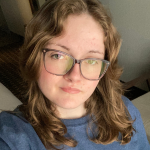
Abigail McKenna is a 17-year-old senior at the Middle College at Austin Peay State University in Clarksville, TN. She has been a member of her NEHS chapter for two years and served as the chapter President her senior year. In 2024, she won an Honorable Mention in the Walden Woods Live Deliberately Essay Contest for her essay “Fire in the Mountains.” A lover of garage rock, free-verse poetry, and midday naps, Abigail hopes to continue sharing her experiences through writing. She will attend Johns Hopkins University in the fall as an English major, where she plans on further pursuing her passion for student journalism.
National English Honor Society
The National English Honor Society (NEHS), founded and sponsored by Sigma Tau Delta, is the only international organization exclusively for secondary students and faculty who, in the field of English, merit special note for past and current accomplishments. Individual secondary schools are invited to petition for a local chapter, through which individuals may be inducted into Society membership. Immediate benefits of affiliation include academic recognition, scholarship and award eligibility, and opportunities for networking with others who share enthusiasm for, and accomplishment in, the language arts.
America’s first honor society was founded in 1776, but high school students didn’t have access to such organizations for another 150 years. Since then, high school honor societies have been developed in leadership, drama, journalism, French, Spanish, mathematics, the sciences, and in various other fields, but not in English. In 2005, National English Honor Society launched and has been growing steadily since, becoming one of the largest academic societies for secondary schools.
As Joyce Carol Oates writes, “This is the time for which we have been waiting.” Or perhaps it was Shakespeare: “Now is the winter of our discontent made glorious summer . . .” we celebrate English studies through NEHS.
National English Honor Society accepts submissions to our blog, NEHS Museletter, from all membership categories (students, Advisors, and alumni). If you are interested in submitting a blog, please read the Suggested Guidelines on our website. Email any questions and all submissions to: submit@nehsmuseletter.us.
