

I read my first-ever chapter book, Esperanza Rising, when I was 10 years old. This book has stuck with me ever since. Written by distinguished Hispanic author Pam Muñoz Ryan, this book exemplifies the narrative of a young Mexican girl who experiences the sudden tragedy of her father’s death. This story tells the importance of love and sacrifice along with cultural and personal struggles and has impacted me as I have grown older. Throughout my life, while going through circumstances similar to those of Esperanza, I understood the struggles she went through, from racism to stereotypes based on the color of my skin. As I got older, I did not want to run away from my identity but rather understand my heritage and inspire others to do the same. Being a part of a minority group, I began to recognize the greatness of Hispanic and Latinx contributions, appreciate my culture more, and embrace who I am and where I come from. Esperanza Rising was my introduction to the world of Hispanic and Latinx writing, which I have grown to love.
Literature and poetry play a significant and eye-opening role in the lives of Hispanic Individuals in America. Whether fiction or nonfiction, authors have offered new perspectives representing and inspiring Hispanic heritage. Through the intricacies and artistic forms of poetry and literature, authors’ powerful stories have changed lives, opened minds, and expressed the beauty and struggles of Hispanic culture.
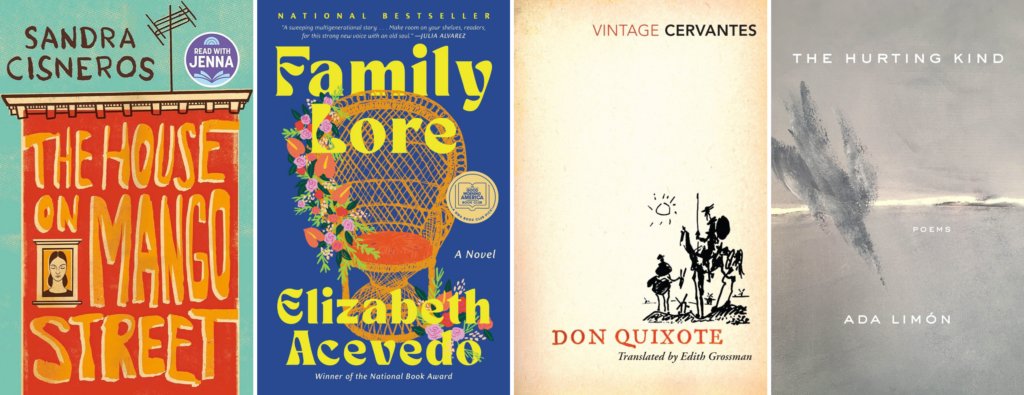
Hispanic and Latinx authors serve as critical voices by sharing their perspectives. One notable Hispanic author is Sandra Cisneros; her powerful perspectives open the door to a new world. Cisneros is a renowned Mexican American writer best known for her groundbreaking novel The House on Mango Street. Cisneros is celebrated for her lyrical prose and poignant exploration of themes such as identity, culture, and the immigrant experience. Her works have earned her numerous accolades, solidifying her as a prominent voice in contemporary literature. Other notable Hispanic authors include Elizabeth Acevedo, Miguel de Cervantes, and Ada Limón. From strong rhetorical strategies to diverse writing styles, these authors construct their work through influential cultural expression. Literature from different dynamics, experiences, and backgrounds reveal the unique experiences of Hispanic and Latinx Americans while also highlighting the complexities of American identity. Hispanic literature reveals the rich tapestry of American culture and experiences.
Moreover, these authors’ perspectives contribute to the importance of Hispanic Heritage Month through the observance and recognition of Latinx culture and heritage. They tell the story of Hispanic individuals and the specific challenges we often face. Throughout history, Hispanic and Latinx literature has grappled with issues of discrimination, education, gender, and sexual orientation. Without Latinx communities, society would not be the same. From literature to traditional music, dance, and food, our culture has had and continues to have a revolutionary impact.
The perfect time to celebrate and recognize this rich culture is from September 15th to October 15th. Hispanic Heritage Month serves as a platform to amplify unique voices and narratives of the American Latin community by recognizing their history, journey, and achievements. As we commemorate the rich culture woven by Hispanic and Latinx communities we must delve into the history, traditions, and contributions that have shaped our collective identity and enriched American society. Hispanic Heritage Month pays homage to diversity, languages, and customs. It inspires and includes younger generations, bringing communities together.
Like Esperanza Rising says, “We may have lost everything, but we still have each other. And that is enough.” As we commemorate Hispanic Heritage Month, honor the roots and history that have brought us here today. To be brown means to be beautiful. Culture is what brings us together as a community. So, we will rise again with new lives ahead.

Mireya Perez is a creative writer who grew up in a small part of Denver called Marlee. When she was 8 years old, she moved to the suburbs of Lakewood. Growing up Mireya struggled with identity as she constantly moved to different schools across DPS and Jefferson County. During her years at Bear Creek High School, she quickly realized it was a welcoming home where she was not afraid to be herself and build a community. In High school, Mireya was a part of many sports & clubs including National English Honor Society, Key Club, National Honor Society, Track, and Cross Country. Currently attending Colorado State University and majoring in Computer Engineering, Mireya is an enthusiastic student who advocates for mental health, runs for fun, and loves learning the art of photography.
National English Honor Society
The National English Honor Society (NEHS), founded and sponsored by Sigma Tau Delta, is the only international organization exclusively for secondary students and faculty who, in the field of English, merit special note for past and current accomplishments. Individual secondary schools are invited to petition for a local chapter, through which individuals may be inducted into Society membership. Immediate benefits of affiliation include academic recognition, scholarship and award eligibility, and opportunities for networking with others who share enthusiasm for, and accomplishment in, the language arts.
America’s first honor society was founded in 1776, but high school students didn’t have access to such organizations for another 150 years. Since then, high school honor societies have been developed in leadership, drama, journalism, French, Spanish, mathematics, the sciences, and in various other fields, but not in English. In 2005, National English Honor Society launched and has been growing steadily since, becoming one of the largest academic societies for secondary schools.
As Joyce Carol Oates writes, “This is the time for which we have been waiting.” Or perhaps it was Shakespeare: “Now is the winter of our discontent made glorious summer . . .” we celebrate English studies through NEHS.
National English Honor Society accepts submissions to our blog, NEHS Museletter, from all membership categories (students, Advisors, and alumni). If you are interested in submitting a blog, please read the Suggested Guidelines on our website. Email any questions and all submissions to: submit@nehsmuseletter.us.
