

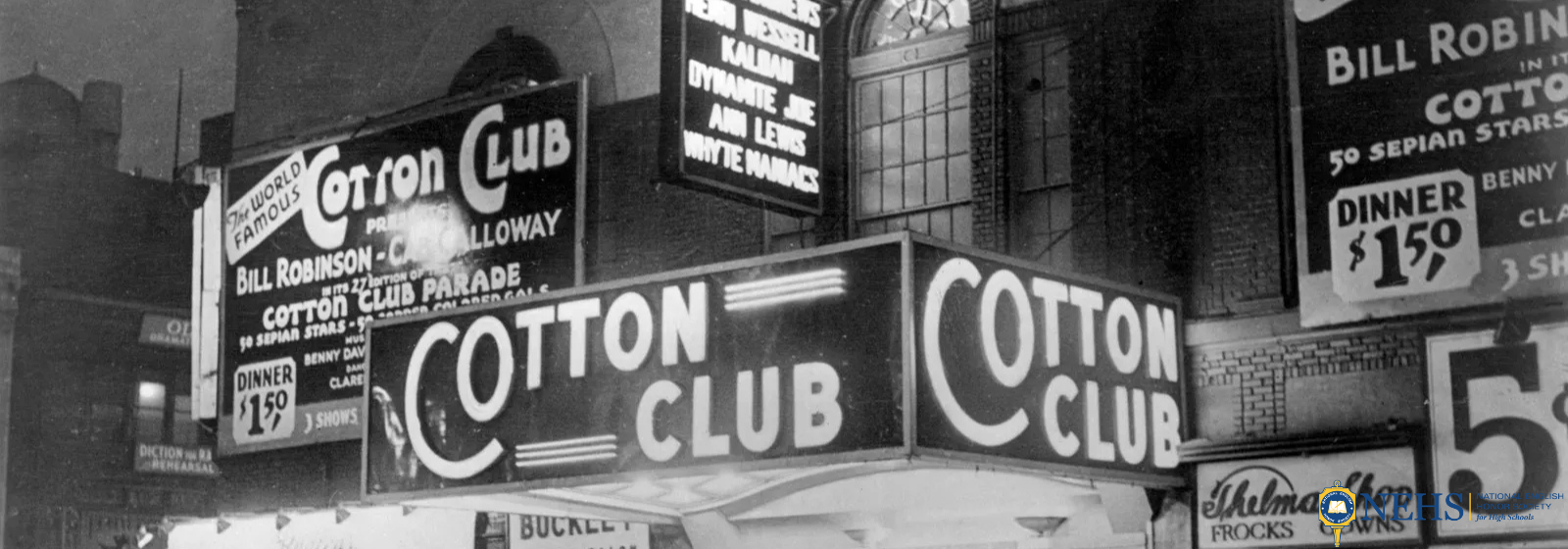
As we observe Black History Month, the texts below, by NEHS student members at Newburgh Free Academy, highlight the power of young voices to reflect on identity, culture, and personal growth while engaging with the histories and stories that shape our world. Through a blend of personal reflection, biography, and cultural analysis, their writing celebrates literature and the arts as spaces for understanding diversity and recognizing lived experiences.
The Fix to the Identity Crisis: Literature
My childhood was filled with books. My mother would buy books above my reading level. However, for me, reading was not forced; it was part of who I was. Now, it feels hard to read even ten pages a week. What happened to my love for reading? As the world around us is just one click away, we can find the news instantly on a phone, computer, or television. But is literature obsolete? I believe literature can shape identity and help address the identity crisis, a claim I support through my own experience.
This past year, every month with my family, I read one book. This allowed me to regain my love for reading. At first, I hated it, especially older books. Why is a book that’s centuries older than me trying to teach themes that are still relevant today? These books are relevant. From the most bizarre science fiction novel to the autobiography of Benjamin Franklin, they reveal history. Literature dismantles the modern world: in a world full of pressures, literature opposes conformity. It asks questions that make us question ourselves and everything around us.
Characters in books provide perspectives on existential questions: Why does pain exist? What are the purposes of life? Who am I? Their lives reveal inconsistencies within the human mind. As humans, we constantly betray our conscience. Before we can form our own identity, we must recognize our contradictions. Although contradictions usually carry a negative connotation, they are part of growth. To find our identity, we have to be honest with ourselves. Literature invites us to examine our existence and create our own identity.
The identities we possess are the stories that tell who we are, where we come from, and the meaning of our lives. Everyone’s identity is unique, and that uniqueness is what makes us human. We should not be constrained by societal pressures or our internal struggles but should strive for individuality. Identity is a process; we continually evolve and write our own stories. As we grow, our identities transform. Our identity is like that of characters in books. In a world where writers control their characters with each stroke of a pen, we have the power to shape our own identity through every action we take.

Abraham Cherian is currently a junior at Newburgh Free Academy, North Campus in New York. He is actively involved in his community, playing varsity basketball and volunteering at a local hospital. This year marks his first time as a member of his school’s National English Honor Society chapter. In his free time, he enjoys going to the gym and spending time with friends. In the future, he hopes to pursue a career in a STEM-related field.
Dancing Into Diversity
A mere 3% of ballet dancers worldwide have the opportunity to perform on a professional stage, such as the American Ballet Theatre’s stage at the Metropolitan Opera House. Becoming a professional dancer is an arduous journey that not all can endure. Of this small group, only 15% become principal dancers, the elite performers who receive the lead roles in major productions. While many professionals begin training at ages two or three, prodigy Misty Copeland did not put on her first pair of ballet shoes until age 13. This is nearly unheard of in the ballet world and, combined with the fact that Copeland is African American, her rise is truly revolutionary.
The naturally graceful ballerina had a difficult upbringing. Raised by a single mother, Copeland and her siblings frequently moved before eventually settling in a motel. She discovered ballet at her local Boys & Girls Club in San Pedro, CA, where her drill team coach encouraged her to take a class taught by Cindy Bradley. Bradley quickly recognized Copeland’s raw talent and invited her to study at her studio. Within months, Copeland was dancing on pointe, an achievement that typically takes years of training.
At 18, Copeland joined the Studio Company at the American Ballet Theatre (ABT), the training ground for dancers entering the main company. After a year, she was promoted but faced discrimination from fellow dancers. Some worried she would stand out in traditionally “white” ballets such as Swan Lake, where uniformity is prized. These pressures led Copeland to question whether she truly belonged in the company.
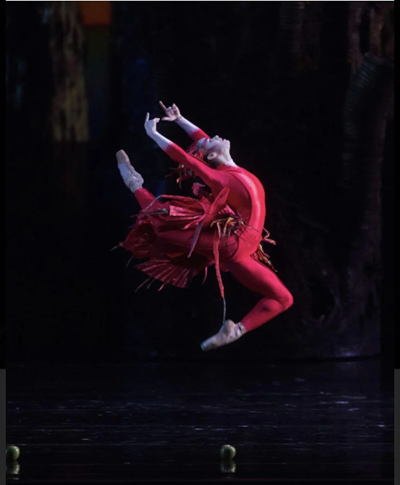
In 2009, musician Prince invited Copeland to star in his music video “Crimson and Clover,” introducing ballet to a wider audience. He later invited her to join his tour while she continued performing with ABT. In 2012, Copeland was cast in the title role of The Firebird, becoming the first African American soloist at ABT in over two decades. Shortly before her debut, she suffered multiple stress fractures that forced her to stop performing after the first show. Through intensive rehabilitation, she returned to the company five months after surgery.
Following her recovery, Copeland became the face of ABT’s Project Plié, which partners with the Boys & Girls Club to make ballet more accessible to diverse communities. In 2015, she was promoted to principal dancer, becoming ABT’s first African American principal dancer. Her achievement marked a historic breakthrough, inspiring a new generation of dancers and expanding what is possible in the world of ballet.

Madisyn “Madi” Finnegan is a junior at Newburgh Free Academy and the Service Coordinator for NFA’s chapter of the National English Honor Society. In addition to her involvement in NEHS, she serves as the treasurer of NFA’s Science Honor Society and secretary of the Italian Honor Society. A top student at NFA, Madi takes pride in her academic achievements. Ever a passionate performer, she is a member of the NFA Advanced Dance Team and an ensemble dancer in last fall’s production of Chicago, Teen Edition. Outside of school, she is a competitive dancer and soloist at New York Performing Arts Center in Washingtonville, NY. In the future, Madi hopes to study biochemistry and genetics in college with the goal of becoming a CRISPR scientist.
The End of the Beginning
For as long as I can remember, my life has never been stable. Moving from state to state, living through different time zones, and being far from most relatives and friends shaped my understanding of what stability means. You might think that this upbringing would make me fear starting a new era of my life and going to college, but it has ignited my desire for it. The thrilling part of growing up is that you can never be fully prepared for new things; all you can do is adjust.
That is what I am prepared to do: adjust. I have been adjusting to change my entire life. I have grown to accept the changes in my voice, face, and body and to love what comes with transformation. That is how I imagine my life after high school. I will struggle, rest, and repeat this cycle until I find a comfortable rhythm. I am unprepared for many responsibilities ahead of me, from driving myself around to standing up for myself and writing the college essay that could shape my future. Even waking up early each day feels like part of a cycle that never stops.
These new responsibilities can feel overwhelming, yet I would rather face them than the long-term burdens of adulthood, such as filing taxes or paying a mortgage. As I move through my teenage years, I feel a growing exhaustion that is unfamiliar. My problems may seem monumental now, but I know that in ten years I may wish to trade adult concerns for the temporary dramas of high school.
With nearly seventeen years in this world, I share the routines common to many teenagers: school, extracurriculars, and personal changes. I am tired of schedules and deadlines and of letting grades define my mood. I hope college will ease some of this anxiety about my future. I want the work I have invested in high school to matter. The fear that it might not consumes me, and I struggle with needing external validation to feel proud of my accomplishments. Still, knowing that many teens share this feeling comforts me and reminds me that I am not alone.
I take comfort in knowing that my decisions are guided by my own choices. I am honest about being afraid of getting older, yet I believe that fear is part of living fully. I worry that my decisions about the future might fail, but that uncertainty is also exciting. I never want to become too comfortable or bored. That is how I imagine getting older and beginning a new life. Whether I am at a university in a year and a half or in a future career, I will continue to grow. No matter how frightening the present feels, I will overcome what now seems impossible.

Anisa Abdul-Khabir is a junior at Newburgh Free Academy, North Campus. Abdul-Khabir is the president of Newburgh Free Academy’s Mock Trial Team and Yearbook Club. She is a member of her school’s Student Council, National English Honor Society, and Black History Club. Maintaining a 4.0 GPA in the top 10% of her class, she has shown examples of leadership, creating NFA’s very first badminton team. Balancing her commitments to extracurriculars, schoolwork, and part time job, Abdul-Khabir is a Goldback with a mission for success. She plans to attend college in fall 2027.
From Frills to Freedom: How the Fashion of the Harlem Renaissance Liberated Black America From Their Stereotypes
Fashion is society’s most clandestine form of control. The clothes we wear shape both how we see ourselves and how others perceive us. Throughout American history, fashion has been used to dehumanize and degrade the Black community. During enslavement, Black women were forced to remove garments that displayed tribal and cultural identities. In response, many created colorful head wraps and intricate patchwork as acts of resistance. Because enslavers often could not interpret these cultural motifs, fashion became a quiet but powerful form of rebellion, proving that forced silence is never complete silence.
Decades later, at the crossroads of musical innovation, artistic experimentation, and renewed racial pride, the Harlem Renaissance emerged. Harlem’s vibrant nightlife, filled with jazz clubs and speakeasies, encouraged bold self-expression. Participants in this cultural movement developed distinctive styles that reflected the Black American experience of the 1910s through the 1930s.
Josephine Baker became one of the defining figures of the era. Her androgynous offstage fashion advanced progressive ideas about gender, while her glamorous stage presence captivated audiences. Her signature Eton crop and kiss curls, inspired by European aristocratic styles, were reimagined as a bold statement of individuality. At a time when Black performers were rarely centered on major stages, Baker’s luminous presence commanded attention and challenged prevailing norms.
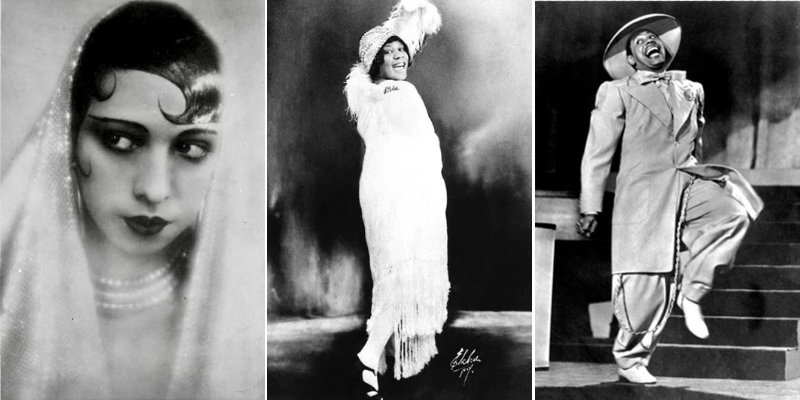
Similarly, Bessie Smith, known as the “Empress of Blues,” embodied the spirit of the movement. After a childhood marked by poverty, she signed with Columbia Records and became a central figure in the Black Vaudeville scene. Onstage, she wore lavish furs, feathers, and pearls that asserted elegance and femininity at a time when Black women were often denied both in public representation. Her performances combined theatrical style with music rooted in Black struggle, expressing resilience and cultural pride.
The era’s fashion revolution also extended to menswear through Cab Calloway and the popularization of the zoot suit. Characterized by exaggerated silhouettes and meticulous tailoring, the style projected confidence and individuality. It countered racist stereotypes of Black men by presenting a playful yet dignified image and helped broaden cultural acceptance of fashion as a space for male expression.
The Harlem Renaissance demonstrated that the Black community could shape and enjoy artistic expression on its own terms. Although systemic oppression persisted, the movement’s experimentation with fashion played a significant role in challenging stereotypes and asserting equality. Through style, artists and performers transformed clothing into a declaration of identity, resistance, and creative freedom.

Natalia Abreu is a 16-year-old Junior at Newburgh Free Academy in Newburgh, NY. Since having access to a computer, she has perused online art galleries and museum catalogs, eager to learn more about the arts and human history. That love has since developed into a love for science, where she currently studies human genomics and women’s health. Despite this, she still considers herself an artist at heart; drawing in her free time, and providing music critiques that nobody asked for. She hopes to pursue a career in neurology in the future.
National English Honor Society
The National English Honor Society (NEHS), founded and sponsored by Sigma Tau Delta, is the only international organization exclusively for secondary students and faculty who, in the field of English, merit special note for past and current accomplishments. Individual secondary schools are invited to petition for a local chapter, through which individuals may be inducted into Society membership. Immediate benefits of affiliation include academic recognition, scholarship and award eligibility, and opportunities for networking with others who share enthusiasm for, and accomplishment in, the language arts.
America’s first honor society was founded in 1776, but high school students didn’t have access to such organizations for another 150 years. Since then, high school honor societies have been developed in leadership, drama, journalism, French, Spanish, mathematics, the sciences, and in various other fields, but not in English. In 2005, National English Honor Society launched and has been growing steadily since, becoming one of the largest academic societies for secondary schools.
As Joyce Carol Oates writes, “This is the time for which we have been waiting.” Or perhaps it was Shakespeare: “Now is the winter of our discontent made glorious summer . . .” we celebrate English studies through NEHS.
National English Honor Society accepts submissions to our blog, NEHS Museletter, from all membership categories (students, Advisors, and alumni). If you are interested in submitting a blog, please read the Suggested Guidelines on our website. Email any questions and all submissions to: submit@nehsmuseletter.us.
