
In this blog, Abbigail Excellent and Riley Chellberg, high school seniors at Lake Mary High School, FL, explore how book banning affects students’ access to literature, representation, and diverse perspectives. They argue for the importance of protecting students’ freedom to read and learn.
The Loss of Literature: How Banning Books Affects Students
Books are an important part of learning, inspiring, and understanding the world around us. They allow us to learn about history, explore cultures, and see life from other people’s perspectives. Despite the benefits of books, not all of them are accepted by society. Over time, books have been banned or challenged for various reasons, including for their content or the ideas they suggest. However, banning books raises concerns about limits on free speech and the right to access information. Some people think certain books should be restricted to protect readers from their content, while others believe banning books limits the spread of knowledge and the education of readers.
Why Are Books Being Banned?
In school, we’ve seen books continuously become banned and removed from our curriculum, placed on shelves that feel miles high, leaving us feeling like we’re missing something. There are many reasons why a book may be removed, but some of the most common are that they may contain explicit content, discuss sensitive topics such as religion, race, and political issues, and/or include profanity. Some readers may find these topics uncomfortable, which can lead to a book being pulled out of schools by educators and legislators, as they decide what they believe is most appropriate for kids to read.
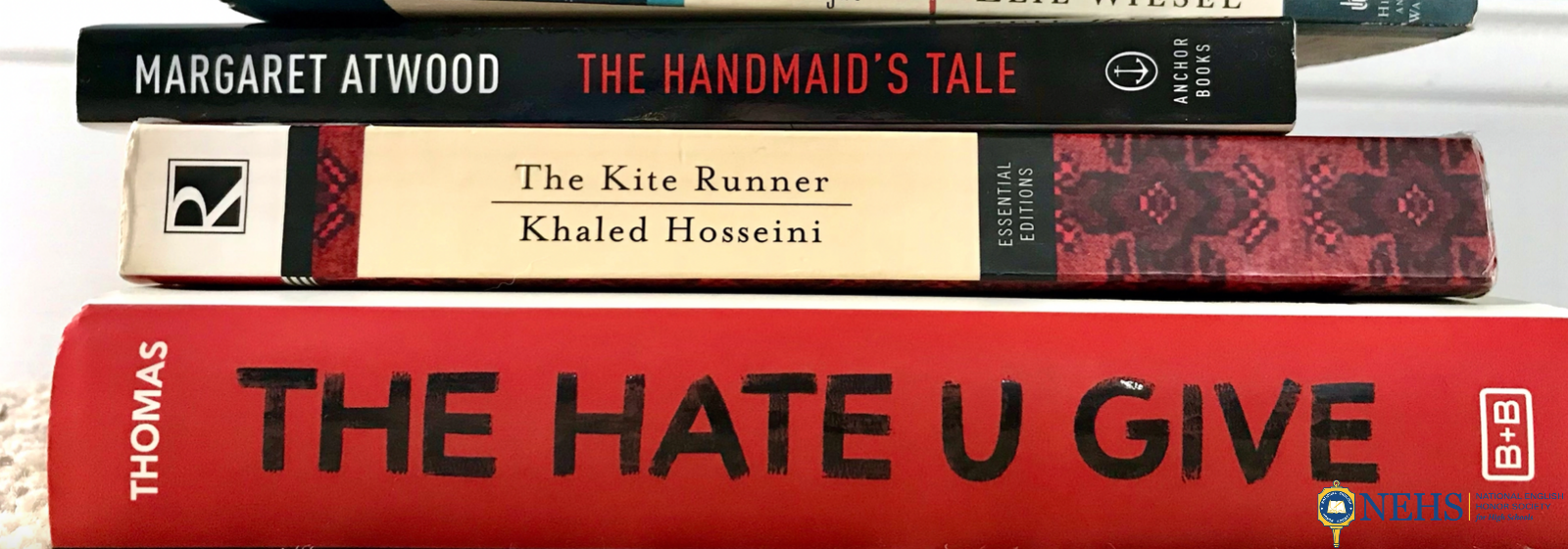
The Kite Runner by Khaled Hosseini has been removed from many schools because of violence, themes of sexual assault, and harsh language. The book also explores war and real historical events, which can make the book feel very upfront. Similarly, The Hate U Give by Angie Thomas has faced challenges because of its profanity, depiction of police violence, and controversial statements. Its portrayal of discrimination and trauma has led to ongoing arguments on whether it belongs in schools, libraries, and classrooms.
Some believe that books like these must be removed in order to protect young people from approaching topics that they are not ready to encounter. Others believe that these topics are difficult but, nonetheless, important.
How Does Book Banning Affect Students?
When a book is banned, the consequences are more serious than us just being unable to read something that fascinates us. Some students may be experiencing some of the same struggles that are described in these books, and they may be searching for an answer. Reading about a scenario or a character who may have gone through a similar challenge or came to a specific understanding allows students to feel seen and understand themselves a little better. If there is no access to these stories, we lose another safe space for students. They may feel ignored or unheard.
Banning books is also a way of limiting important information. Through literature, we can learn about people who we may not understand, explore different perspectives and cultures, and discover information we did not know before. Banning books is a form of censorship that limits students’ ability to express themselves freely or truly have full access to the well-rounded education we have been promised. The freedom to read books allows us to ask questions and understand more as we are given the chance to think critically and see the world from a new perspective.
Some students might not want to pick up a book that discusses potential controversial topics, but there are many ways they can opt out or simply choose not to read it. There are many other ways to give individuals a voice without limiting other students’ educational opportunities.

Abbigail Excellent is a high school senior with a love of English and social studies. She is involved in several activities at her school, including the National English Honor Society, Law Club, and Book Club. Outside of this she participates in cheerleading, track, and enjoys visiting museums. National English Honor Society inspires her creativity and lets her share her love of reading with her peers.

Riley Chellberg is a high school senior with a love of reading and writing. She is involved in many different activities including track, cheerleading, National English Honor Society, National Honor Society, and many other clubs and honor societies at her school. Outside of school she loves to do volunteer work with her church and work with kids whenever she can. She hopes to become an elementary school teacher and pass her love of English onto the next generation.
National English Honor Society
The National English Honor Society (NEHS), founded and sponsored by Sigma Tau Delta, is the only international organization exclusively for secondary students and faculty who, in the field of English, merit special note for past and current accomplishments. Individual secondary schools are invited to petition for a local chapter, through which individuals may be inducted into Society membership. Immediate benefits of affiliation include academic recognition, scholarship and award eligibility, and opportunities for networking with others who share enthusiasm for, and accomplishment in, the language arts.
America’s first honor society was founded in 1776, but high school students didn’t have access to such organizations for another 150 years. Since then, high school honor societies have been developed in leadership, drama, journalism, French, Spanish, mathematics, the sciences, and in various other fields, but not in English. In 2005, National English Honor Society launched and has been growing steadily since, becoming one of the largest academic societies for secondary schools.
As Joyce Carol Oates writes, “This is the time for which we have been waiting.” Or perhaps it was Shakespeare: “Now is the winter of our discontent made glorious summer . . .” we celebrate English studies through NEHS.
National English Honor Society accepts submissions to our blog, NEHS Museletter, from all membership categories (students, Advisors, and alumni). If you are interested in submitting a blog, please read the Suggested Guidelines on our website. Email any questions and all submissions to: submit@nehsmuseletter.us.
