
November is typically acknowledged as the month of gratitude in which we gather with friends and family to express our thankfulness, often accompanied with a big meal that includes turkey, stuffing, and other traditional dishes. However, this notable time of year indeed holds a special significance unique to Jewish Americans. November is also Mizrahi Heritage Month, dedicated to honoring the rich cultural heritage of Mizrahi, and often Sephardic Jewish communities as well, due to their overlapping cultures.
These observances in November symbolize a blend of identities. The month serves as a bridge, linking the cultural richness of Mizrahi and Sephardic ancestry with American values of gratitude. Likewise, the Jewish value of hodah (הוֹדָה) meaning “gratitude,” also directly aligns with the spirit of Thanksgiving. It is more than just a feeling of thankfulness; it is an active expression of gratitude through prayers, blessings, and actions acknowledging the blessings in our lives. Thanksgiving is a time to come together as a community as meals and gatherings provide an opportunity for people to connect, share their gratitude, and bond with their loved ones.
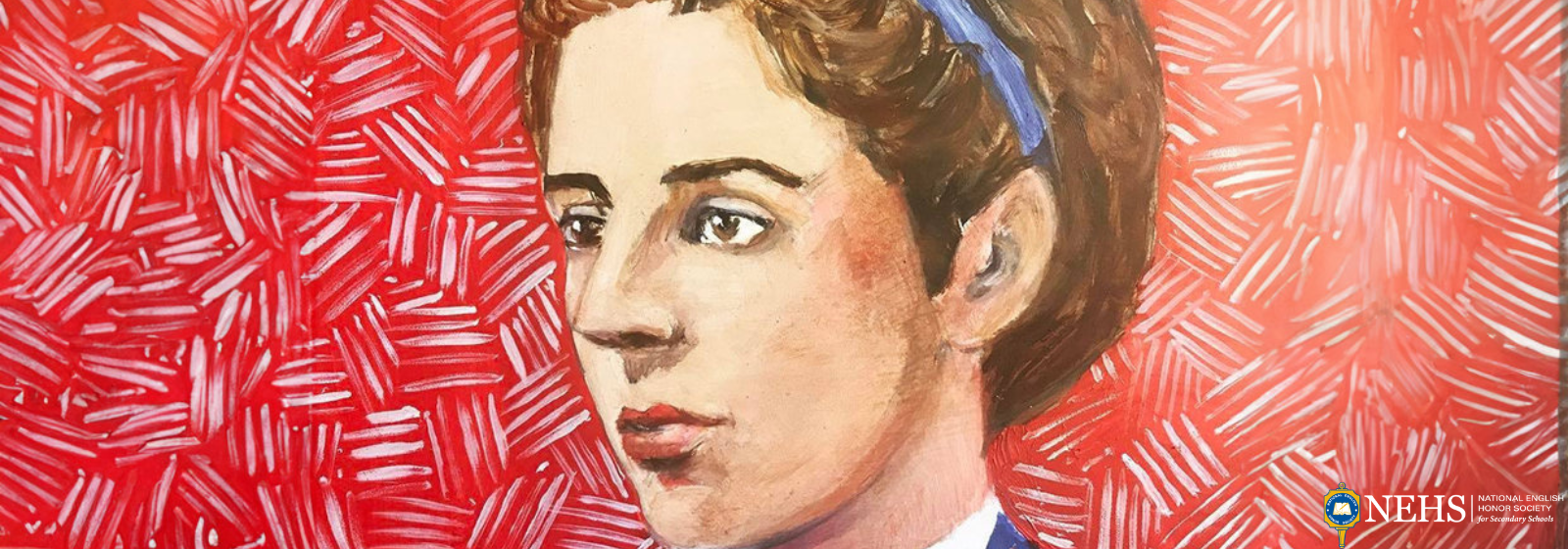
Emma Lazarus, an American poet of Sephardic Jewish descent, greatly embodies the dual identities celebrated in November. She became a passionate voice for Jewish identity, advocating against antisemitism through her poetry and essays, which highlight Jewish resilience and heritage.
She illustrates the spirit of unity in her famous poem “The New Colossus”:
Not like the brazen giant of Greek fame,
With conquering limbs astride from land to land;
Here at our sea-washed, sunset gates shall stand
A mighty woman with a torch, whose flame
Is the imprisoned lightning, and her name
Mother of Exiles. From her beacon-hand
Glows world-wide welcome; her mild eyes command
The air-bridged harbor that twin cities frame.
“Keep, ancient lands, your storied pomp!” cries she
With silent lips. “Give me your tired, your poor,
Your huddled masses yearning to breathe free,
The wretched refuse of your teeming shore.
Send these, the homeless, tempest-tost to me,
I lift my lamp beside the golden door!”
The Statue of Liberty’s powerful message still declares: “Give me your tired, your poor, your huddled masses yearning to breathe free.” This was a greeting to new Americans—her poem welcoming shiploads of immigrants when they finally reached Ellis Island and its beloved Statue of Liberty.
At Milken Community School, Lazarus’ legacy continues to resonate among its large Sephardic population, and our NEHS chapter. In fact, we honor her voice by naming a division of our student population after her, and teaching students about her poetry and its messages of inclusivity and hope.
Not only is November a month of gratitude, but also one of honoring heritage—much like Emma Lazarus, a prime example of a Jewish American celebrating their place in American society while staying true to their cultural background.
Authored by Student Chapter Members
People of the Good Book Chapter
Milken Community School, Los Angeles, CA
National English Honor Society
The National English Honor Society (NEHS), founded and sponsored by Sigma Tau Delta, is the only international organization exclusively for secondary students and faculty who, in the field of English, merit special note for past and current accomplishments. Individual secondary schools are invited to petition for a local chapter, through which individuals may be inducted into Society membership. Immediate benefits of affiliation include academic recognition, scholarship and award eligibility, and opportunities for networking with others who share enthusiasm for, and accomplishment in, the language arts.
America’s first honor society was founded in 1776, but high school students didn’t have access to such organizations for another 150 years. Since then, high school honor societies have been developed in leadership, drama, journalism, French, Spanish, mathematics, the sciences, and in various other fields, but not in English. In 2005, National English Honor Society launched and has been growing steadily since, becoming one of the largest academic societies for secondary schools.
As Joyce Carol Oates writes, “This is the time for which we have been waiting.” Or perhaps it was Shakespeare: “Now is the winter of our discontent made glorious summer . . .” we celebrate English studies through NEHS.
National English Honor Society accepts submissions to our blog, NEHS Museletter, from all membership categories (students, Advisors, and alumni). If you are interested in submitting a blog, please read the Suggested Guidelines on our website. Email any questions and all submissions to: submit@nehsmuseletter.us.
