

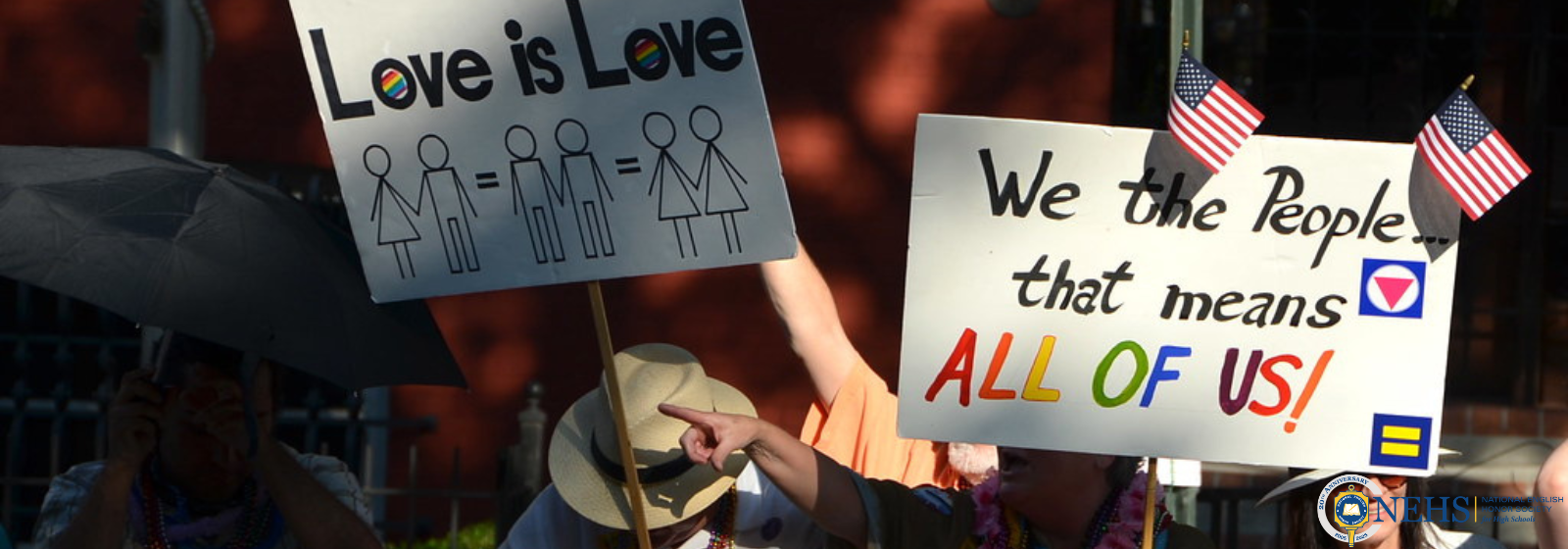
This week’s blog, written by Federico Quiros, from The Wingate School in Mexico, is a reflection on the personal and political meaning of Pride Month. In it, Federico shares his journey of self-discovery, how he has embraced his identity, and how it has become both a source of strength and a call to action. Read on to find out why Fede believes that Pride is not only a celebration, but also a responsibility—to honor the past, recognize the successes and failures of the present, and fight for a more just future.
Check out how NEHS is celebrating Pride Month through its Lambda Ampersand Award for LGBTQIA+ Writing and its Pride apparel.
The Privilege of Being Proud
I was saved by my Queerness. As a child of a conservative family, and a member of a traditional catholic community, I always felt like an outsider. I never enjoyed soccer, never found joy in cars, and never found an opportunity to relate to my male classmates. The feeling of being an outsider has always followed me, but understanding my identity has allowed me to flourish into a wonderful, joyful person who loves myself. Pride has allowed me to express these feelings and find comfort within them. For me, June has become a month to look forward to, similar to the way I look forward to my birthday.
While there are a variety of reasons to celebrate Pride Month, it is important to recognize that, at its core, Pride month is a symbol of freedom: freedom to express your identity and celebrate your effort to be who you are.
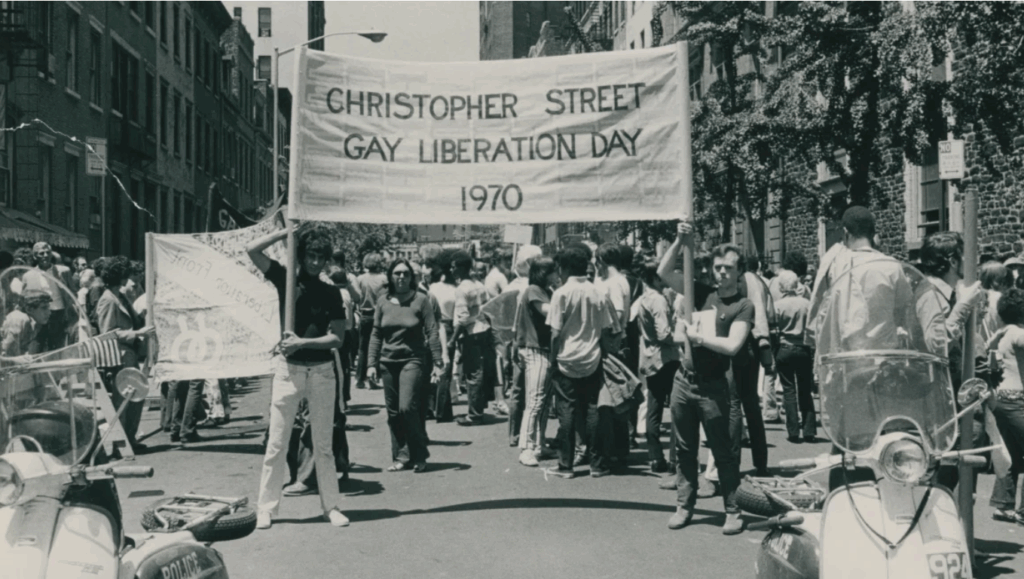
Historically, Pride Month has been celebrated to commemorate the Stonewall Uprising of June 1969 in New York City, a pivotal moment in the LGBTQIA+ rights movement. The Stonewall Uprising marked a turning point in queer history and was the beginning of today’s Queer rights movement. Sparked by a police raid at New York’s Stonewall Inn, resistance was led by trans women of color and queer people who made a global call for justice and visibility. It shattered silence and served as the foundation for Pride as both celebration and protest. Stonewall provided a declaration of how the LGBTQIA+ community would no longer live in the shadows or keep quiet in the face of discrimination.
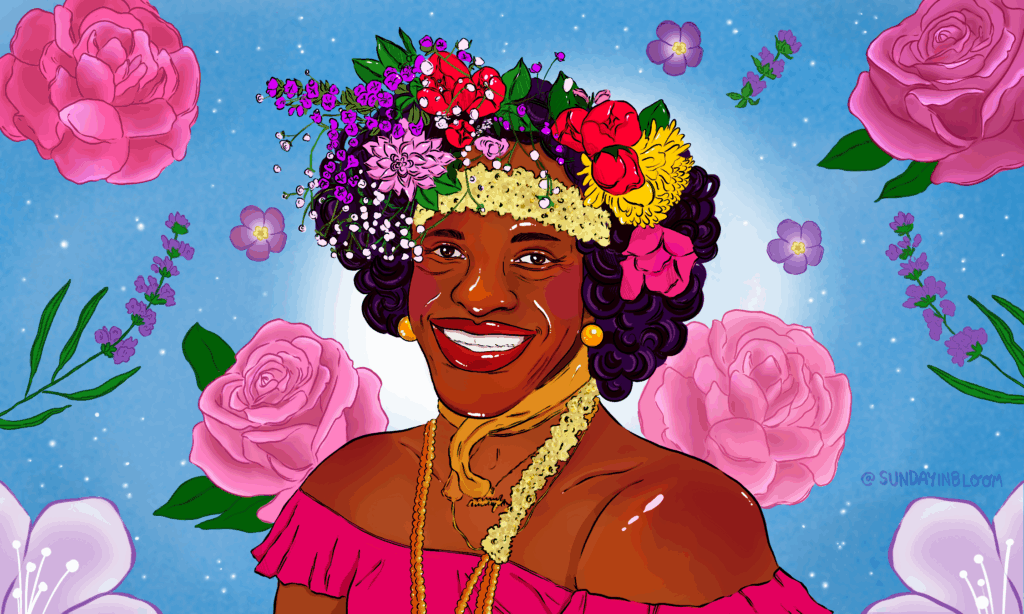
As a result of that protest, June has become a month in which I’m able to embrace and express my own identity freely. I believe I have the responsibility to remember and recognize the efforts of those queer individuals. I express myself, I fight, and I raise my voice for the importance of queer identity in order to honor the deaths of members of the LGBTQIA+ community, who risked their lives not only during Stonewall, but throughout history. Who would I have become without the efforts of those individuals? Would I have had to continue to hide behind a mask of false masculinity in an effort to fit in? The Stonewall Uprising has motivated me to question my own efforts and has given me the enthusiasm I need to continue to fight for my rights. That’s why Pride Month means so much to me.
Pride is not only about celebrating who I am today, but also about standing up for those who can’t. I carry with me the joy of being able to express myself, but I’m also aware of the silence many are still forced to live in. For every parade I get to enjoy, there are countless others who remain unable to speak, unable to live their lives. Pride is a privilege, and most importantly a responsibility. Queerness can, for many, feel like an individual battle, but Pride allows people to come together and feel understood. This is incredibly important, especially for those who don’t have a community that appreciates and recognizes their identity.
Though efforts to protect queer individuals worldwide do exist, there is a long way to go in order to ensure full protection and justice for the LGBTQIA+ community. In many parts of the world, LGBTQIA+ individuals face significant risks, simply for being who they are. In the past few years, the queer community has found itself surrounded by violence: the murders of trans people have increased by the hundreds and peaceful protests have become the site of many deaths. In 2023, Brazil reported the highest number of trans people murdered anywhere in the world, with 100 victims, followed by Mexico with 52 reported killings. Injustice, however, doesn’t limit itself to violence. As of early 2025, 27 US states have enacted laws restricting gender-affirming healthcare for minors, removing the rights of countless trans individuals and leaving them with risks to their wellbeing.
Queer people shouldn’t hide: they should feel confident to exist, express their thoughts, and not feel targeted because of who they are. The celebration of Pride is always threatened, and we must all gather together in order to push for better rights and protections.
We must fight for the girl scared to cut her hair the way she wants, or the boy who wants to wear makeup. We must fight for the rights of the people who have had their independence stripped from them by harmful ideals. We must fight for the right to walk to school and to not be shot and killed on the street. We deserve these freedoms.

Federico Quiros is a sophomore currently enrolled at The Wingate School, Mexico. He is an active member of his school’s student council, MUN, and NEHS. Finding a passion within social activism and politics, he pushes for growth within his school community. He incorporates his passions, ranging from photography to writing, in order to bring about change or raise awareness of issues he comes across in his day-to-day life. He believes art and language are powerful tools for transformation, advocating for change within student council activities, articles within his school magazine, and through independent efforts to advocate for inclusive education. He aims to create his own photography club, sharing different skills and ideas with others, and plans to raise awareness of queer rights alongside independent organizations within Mexico City.
National English Honor Society
The National English Honor Society (NEHS), founded and sponsored by Sigma Tau Delta, is the only international organization exclusively for secondary students and faculty who, in the field of English, merit special note for past and current accomplishments. Individual secondary schools are invited to petition for a local chapter, through which individuals may be inducted into Society membership. Immediate benefits of affiliation include academic recognition, scholarship and award eligibility, and opportunities for networking with others who share enthusiasm for, and accomplishment in, the language arts.
America’s first honor society was founded in 1776, but high school students didn’t have access to such organizations for another 150 years. Since then, high school honor societies have been developed in leadership, drama, journalism, French, Spanish, mathematics, the sciences, and in various other fields, but not in English. In 2005, National English Honor Society launched and has been growing steadily since, becoming one of the largest academic societies for secondary schools.
As Joyce Carol Oates writes, “This is the time for which we have been waiting.” Or perhaps it was Shakespeare: “Now is the winter of our discontent made glorious summer . . .” we celebrate English studies through NEHS.
National English Honor Society accepts submissions to our blog, NEHS Museletter, from all membership categories (students, Advisors, and alumni). If you are interested in submitting a blog, please read the Suggested Guidelines on our website. Email any questions and all submissions to: submit@nehsmuseletter.us.
