

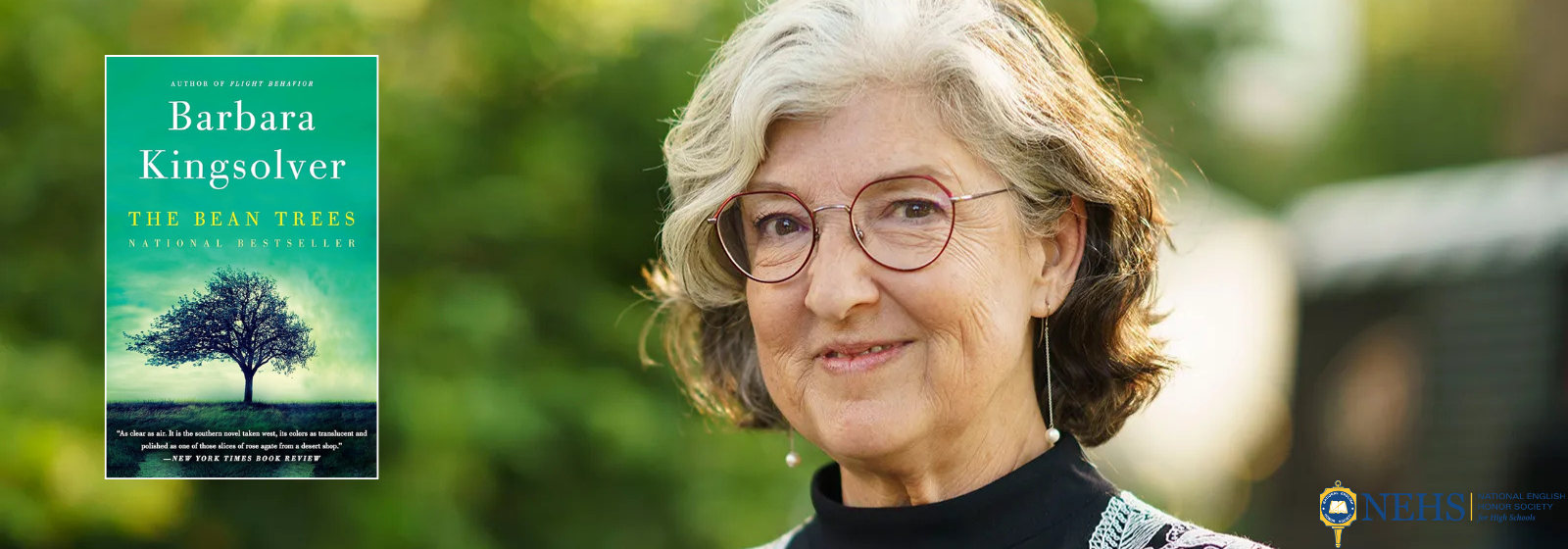
Stories that explore women’s resilience and the power of community are especially vital at a time when issues of gender equity, marginalization, and belonging continue to shape social and political conversations. Literature offers us a powerful lens through which to examine these themes, inviting readers not only to reflect on the past but also to consider how shared struggles can foster solidarity and change. In this blog post, Maria Apesos from Maryvale Preparatory School in Maryland examines Barbara Kingsolver’s The Bean Trees through a feminist lens, focusing on how women can form meaningful communities in the face of trauma and societal pressure.
Women Creating Community Amidst Struggle: Barbara Kingsolver’s The Bean Trees
“The happiest people are the ones with the most community,” declared Barbara Kingsolver in her 2008 commencement speech at Duke University. A long-time feminist and prolific author, Kingsolver recognizes the importance of community as she portrays connections among women in her novels. However, this community can only be grown if feminists let down their guard and lean on each other for support. The Bean Trees is a statement that feminists don’t have to be strong; they can be honest with their community, their family. This book captures a snapshot of the social culture of the late 80s, and many of the issues it discusses, including sexism and marginalization, continue to resonate in our society today.
While reading Barbara Kingsolver’s The Bean Trees, I connected with the powerful female characters—Taylor, Lou Ann, and Turtle—who opened up with each other about the struggles they faced as women. Taylor, the protagonist, feels she spends her life overcoming the quiet and weak stereotypes young Kentucky women often face. Living in the 1980s, Taylor sets off with nothing but her car and desire to embrace whatever comes her way. While on her journey, she meets a series of female characters: Turtle, the Native American toddler Taylor eventually adopts, who was raped by a family member and is mute as a result; Lou Ann, who worries about men objectifying and groping her whenever she uses public transport; and Esperanza, an asylum seeker who struggles to overcome the prejudice she faces as a Guatemalan.
Over the course of the novel, these characters learn about each other’s struggles and bond through their shared experiences. As they go “through hell and high water together,” these women become like family and learn “each other’s good and bad sides, stuff nobody else knows” (Kingsolver 244). Their honesty and ability to overcome challenges together allows them to create a small but tight-knit community.
In the beginning of The Bean Trees, Taylor, Lou Ann, and Turtle are held back by their trauma and fears. These characters couldn’t be their authentic and happy selves and seeing them unable to flourish was heartbreaking. But reading about their journeys of finding themselves in a patriarchal society was inspiring. Their self-discovery wasn’t a linear path toward contentment. Rather, it involved much backtracking and difficulty, which I found very relatable and comforting. Instead of solidifying this stereotype of the strong independent feminist, Kingsolver uses these characters as proof that feminism requires community. Women should look to each other for support and guidance on how to overcome their anxieties and trauma. Especially during a time when women’s rights are at risk. Thus, the type of community that Taylor, Lou Ann, and Turtle created is the best way to fight back against this patriarchal society.

Maria Apesos is a senior at Maryvale Preparatory School in Timonium, MD. She has been a member of her school’s NEHS chapter for two years. Since freshman year, Maria has written for her school’s newspaper, The Monthly Roar, with the last two years serving as the editor-in-chief. In her free time, Maria enjoys spending time with friends and family, listening to music, and watching movies. Maria is excited to attend Northwestern University this fall to pursue Journalism.
National English Honor Society
The National English Honor Society (NEHS), founded and sponsored by Sigma Tau Delta, is the only international organization exclusively for secondary students and faculty who, in the field of English, merit special note for past and current accomplishments. Individual secondary schools are invited to petition for a local chapter, through which individuals may be inducted into Society membership. Immediate benefits of affiliation include academic recognition, scholarship and award eligibility, and opportunities for networking with others who share enthusiasm for, and accomplishment in, the language arts.
America’s first honor society was founded in 1776, but high school students didn’t have access to such organizations for another 150 years. Since then, high school honor societies have been developed in leadership, drama, journalism, French, Spanish, mathematics, the sciences, and in various other fields, but not in English. In 2005, National English Honor Society launched and has been growing steadily since, becoming one of the largest academic societies for secondary schools.
As Joyce Carol Oates writes, “This is the time for which we have been waiting.” Or perhaps it was Shakespeare: “Now is the winter of our discontent made glorious summer . . .” we celebrate English studies through NEHS.
National English Honor Society accepts submissions to our blog, NEHS Museletter, from all membership categories (students, Advisors, and alumni). If you are interested in submitting a blog, please read the Suggested Guidelines on our website. Email any questions and all submissions to: submit@nehsmuseletter.us.
