
This week’s blog, by Emma Castro Rodríguez from the International Christian School in Costa Rica, explores the power of literature as a force against oppression and tyranny. By drawing on the works of George Orwell, Emma reflects on how books can preserve history, inspire empathy, and encourage individuals to question injustice.
Books: Weapons of Mass Destruction
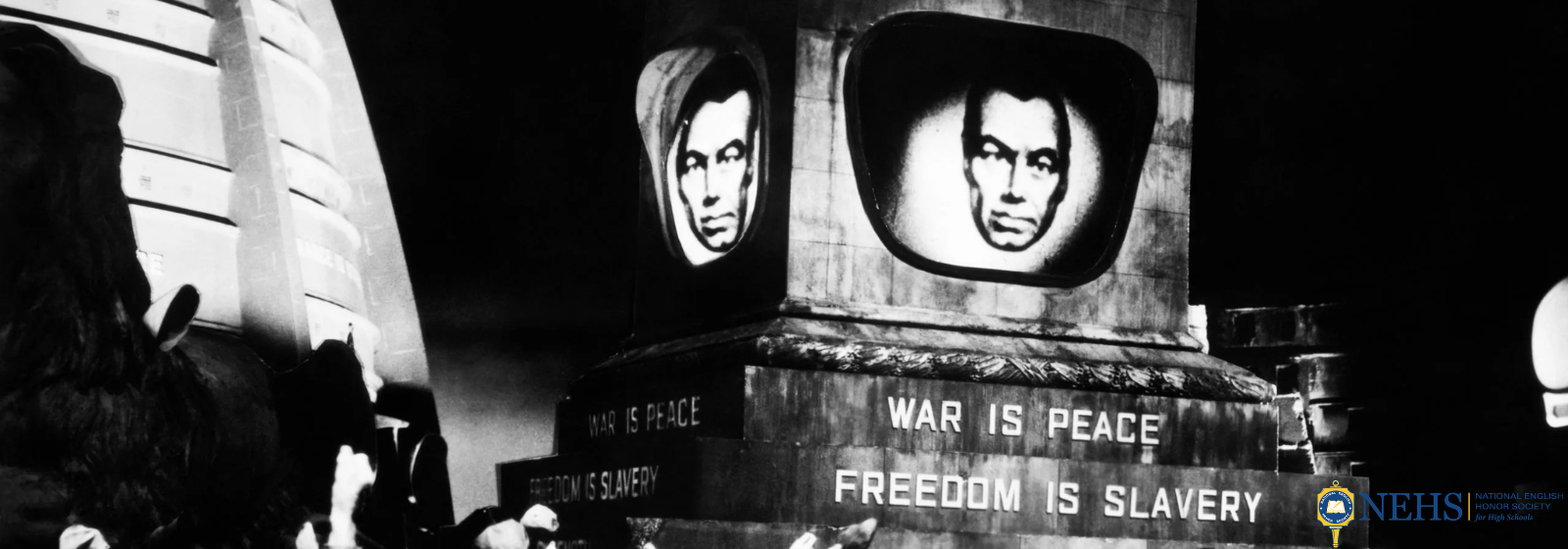
In 1984, George Orwell wrote, “Until they become conscious they will never rebel, and until after they have rebelled they cannot become conscious.” This idea has been reflected in many oppressive systems throughout history, whose main strategy is to divide society and keep the population ignorant so that individuals are unable to question those in power. But how do dictators achieve this? The answer is simple: by restricting knowledge as much as possible, often by banning access to literature. I have come to realize that books are among the most powerful tools we possess, because dictatorships view them as a serious threat. Books arm individuals with knowledge that cannot easily be manipulated, rebellious ideas from history, awareness of the wider world, and empathy that can destroy the divisions tyrants try to form. The only people who see reading as dangerous are those who crave control.
History demonstrates that dictators fear both literacy and the influence books have on inspiring people to take action. At school, I have learned that books act as tangible links between the past and the present. Literature uncovers marginalized and silenced perspectives, providing a fuller understanding of the human experience. Tyrants seek to restrict these sources because keeping people ignorant prevents them from recognizing patterns of injustice and abuse of power that continue to repeat themselves throughout history.
Furthermore, books provide understanding that discourages ignorant obedience. People cannot be manipulated when they are truly informed. While studying Animal Farm in my English class, my teacher emphasized that the pigs, who symbolize the ruling elite, are the only animals capable of reading and writing. By keeping the rest of the animals uneducated, they ensured that their laws and actions would never be questioned. After analyzing this novel in class, I recognized how essential ignorance is for tyrants to maintain their authority. Literature exposes patterns of tyranny, broadens perspectives, and encourages people to question why leaders demand such submission. As a result, books inspire ideas that can lead to resistance and change; ideas that dictators fear because they are difficult to suppress. History and awareness, preserved through literature, become a tyrant’s greatest enemy because they prove that oppressive regimes can, and have, fallen.
Another major threat books pose to tyrants is their emotional impact. Beyond spreading ideas, literature creates something dictators fear even more: empathy. Empathy is dangerous to oppressive systems because it destroys the “us against them” mentality. One of the most common strategies used by dictators is to convince people that another group is a threat, while presenting themselves as protectors. Literature dismantles this strategy by allowing readers to experience another person’s life and perspective, creating emotional understanding and connection. As P. Matthijs Bal explains, “It has been suggested that people who read a lot of fiction become more empathic, because fiction is a simulation of social experiences, in which people practice and enhance their interpersonal skills.” Empathetic citizens are less likely to accept division and discrimination, which directly threatens the control tyrants seek to maintain.
Literature remains one of the greatest threats to oppressive regimes because it preserves historical memory, spreads knowledge, and inspires empathy that allows people to resist manipulation. Through studying and analyzing important novels such as Animal Farm in ninth grade and The Breadwinner by Deborah Ellis in seventh grade, it has become clear to me that books are essential. We continue learning about tyrannical leaders so that we can recognize their behaviors and have the courage to challenge them. In the end, the greatest weapon against tyranny is a page filled with words, ideas, and emotions: a true weapon of mass destruction against those who seek absolute control.

Emma Castro Rodríguez is a 16-year-old Costa Rican student currently serving as the Secretary of the Camp Half-Blood Chapter of National English Honor Society at her school. She is deeply committed to academic excellence and personal growth, consistently striving to expand her knowledge and skills through dedicated study. As she continues her educational journey, Emma remains focused on building a future guided by curiosity, discipline, and a strong passion for learning. She is especially passionate about reading and education, as she believes they are essential tools for both intellectual and personal development. For her, reading is more than an academic activity, it is a meaningful way to explore new perspectives, challenge ideas, build emotional intelligence and continuously grow as an individual.
National English Honor Society
The National English Honor Society (NEHS), founded and sponsored by Sigma Tau Delta, is the only international organization exclusively for secondary students and faculty who, in the field of English, merit special note for past and current accomplishments. Individual secondary schools are invited to petition for a local chapter, through which individuals may be inducted into Society membership. Immediate benefits of affiliation include academic recognition, scholarship and award eligibility, and opportunities for networking with others who share enthusiasm for, and accomplishment in, the language arts.
America’s first honor society was founded in 1776, but high school students didn’t have access to such organizations for another 150 years. Since then, high school honor societies have been developed in leadership, drama, journalism, French, Spanish, mathematics, the sciences, and in various other fields, but not in English. In 2005, National English Honor Society launched and has been growing steadily since, becoming one of the largest academic societies for secondary schools.
As Joyce Carol Oates writes, “This is the time for which we have been waiting.” Or perhaps it was Shakespeare: “Now is the winter of our discontent made glorious summer . . .” we celebrate English studies through NEHS.
National English Honor Society accepts submissions to our blog, NEHS Museletter, from all membership categories (students, Advisors, and alumni). If you are interested in submitting a blog, please read the Suggested Guidelines on our website. Email any questions and all submissions to: submit@nehsmuseletter.us.
