

Black History Month is a time to honor the lives, creativity, and lasting influence of Black Americans whose contributions have shaped culture, art, and history. It also provides an opportunity for NEHS chapters around the world to engage in initiatives such as the NCTE African American Read-In (see below), which celebrates Black voices and encourages communities to read, discuss, and amplify African American literature, and the Little Free Library Read in Color Program (see below), which works to increase access to diverse books that reflect a wide range of lived experiences.
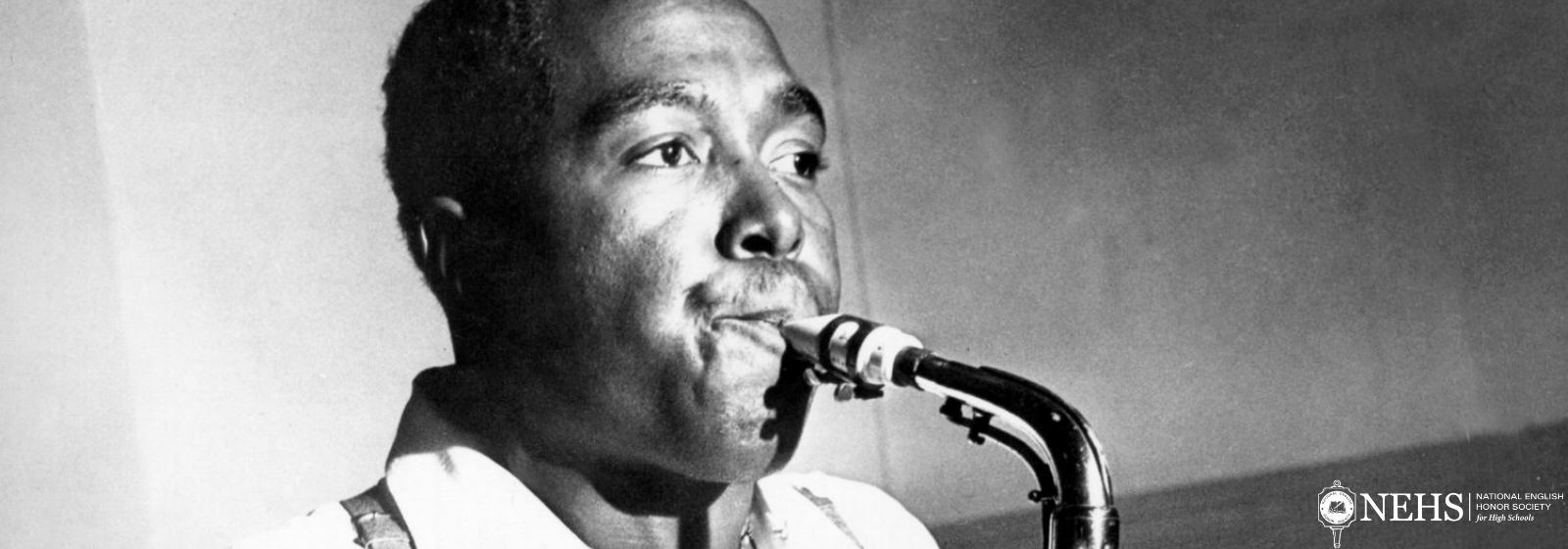
In “Breaking Free: The Story of Charlie Parker,” Brennen Teeter highlights the life of one such influential figure: legendary jazz musician Charlie Parker. As a Black artist working in a time of segregation and limited opportunity, Parker revolutionized jazz through innovation, discipline, and fearless creativity. His journey, from relentless practice to transforming bebop into a global movement, reflects the resilience, artistry, and cultural impact that Black History Month and these reading initiatives seek to celebrate.
Breaking Free: The Story of Charlie Parker
Music has a beautiful way of breaking down barriers. The “inventor of modern-day jazz,” Charlie Parker, was a virtuoso of the alto saxophone during the 1930s. He understood that music led to openness, as it could not always be confined to a single definition. Parker once observed, “They teach you there is a boundary line to music. But, man, there is no boundary line to art.” Parker inspired many people to pick up an instrument and create music of their own.
At the age of 11, he picked up a saxophone, and by 14 he was already performing with his local high school band in Kansas City. Though this was an impressive feat, it did not happen through pure talent: he spent 11-15 hours a day practicing. Parker based his style on Count Basie and Bennie Moten but, most importantly, on that of Art Tatum. While working as a busboy, he heard Art Tatum perform. Tatum, he discovered, played a unique style known as Bebop. Parker would later go on to master this style and make it famous around the world.
Though Parker did not start as early as some other musicians, he quickly gained fame and became a household name. Parker’s determination to improve his own style of music was evident in the many stories told about his life. One particular tale in the jazz world comes from his early years as a formative musician: In 1937, Parker waited in an extremely long line for a chance to jam onstage at the famous Kansas City’s Reno Club. The guest performer at the event was the drummer for the Count Basie Orchestra, Jo Jones. Though Charlie practiced nonstop, when it was his turn to take the stage, he began playing, and then suddenly froze. Seeing this, Jo Jones became angry and threw a cymbal at his foot. As Parker left, he yelled to the crowd that he would be back and be better next time. And after a year of practicing, he returned to show how great a player he truly was.
After making his debut Parker would go on to perform with many famous groups, printing his name into history. In 1938 Parker joined the band led by Jay McShann, a famous pianist. He would go on to perform on and off with the band for the next four years. In 1942 he joined the Earl Hines Band but he was fired not long after for not being able to keep time. In the years leading up to his death in 1955, he spent most of the time performing with random groups or performing solo on stage. Regardless of whom he performed alongside, he continued to perfect his own bebop style for which he would become famous years later.
Throughout his short life, Parker changed the music world in ways he would never get to see. Future generations would grow up listening to his music and taking inspiration from his tunes and styles. He would inspire thousands to try bebop and further expand the definition of jazz music. The dedication Parker put into perfecting his style would lead many others to follow suit and eventually led to a style of jazz music that would dominate bars and dance clubs. There is no doubt that Charlie Parker is one of the greatest jazz musicians to grace the earth, and his commitment to his craft should be an inspiration to us all.

Brennen Teeter is currently a senior at Belleville East High School in Belleville, IL, and President of the school’s NEHS chapter, The Literary Lancers. In his free time Brennen plays the Baritone Saxophone in many of the bands at Belleville East. He plans on studying Aerospace Engineering after high school.
Black History Month provides a thought-provoking opportunity for NEHS student members and chapters to recognize and amplify Black voices, literature, and contributions to culture. By participating in the African American Read-In (AARI) and the Read in Color program, NEHS chapters and students can engage in meaningful conversations while promoting literacy and inclusivity throughout their school and wider communities.
What is the African American Read-In?
The African American Read-In (AARI), established by NEHS partner the National Council of Teachers of English (NCTE), is a nationwide initiative that encourages individuals and groups to read works by African American authors during Black History Month. Since 1990, the AARI has reached millions of participants, fostering a love of reading and a greater understanding of African American culture.
Ways in which you could participate:
- Organize a reading event: Host a gathering where students, faculty, and community members read aloud from books, poems, or speeches by African American writers past and present. Check out the Read-In Toolkit and add your event to the calendar.
- Collaborate with local schools or libraries: Partner with other organizations to reach a wider audience and create a dynamic, shared experience.
- Incorporate creative elements into classes and chapter activities: Include discussions, music, or art inspired by the readings to deepen the connection with the texts.
- Attend Library Joy Meets the 2026 NCTE National African American Read-In on Thursday, February 12, 2026, at 1 p.m. ET. Educators, their students, and preservice teachers are invited to a 45-minute conversation with Reading Rainbow host and author Mychal Threets.
What is the Read in Color Program?
The Read in Color program, created by NEHS partner organization Little Free Library, distributes books that reflect diverse perspectives, including stories by and about Black authors and characters. By making diverse books more accessible, the program helps foster empathy, understanding, and a sense of belonging.
How you can get involved:
- Stock Little Free Libraries: Gather books by Black authors to place in Little Free Libraries within your community. Search for libraries that use the Read in Color Indicator to let you know that diverse books are available.
- Create your own Little Free Library: Establish an NEHS Little Free Library in a high-traffic area and dedicate it to diverse voices, ensuring that books by Black authors are prominently featured. You can use the Read in Color Indicator to show the world that your library contains diverse texts.
- Host a book drive: Collect donations of diverse books and distribute them to schools, libraries, or community centers.
- Sign the Read in Color Pledge indicating your commitment to read and share diverse books that amplify marginalized voices.
- Volunteer with Little Free Library by joining Team LFL to promote book access within your community.
The Importance of Your Participation
By engaging in these initiatives, NEHS student members and chapters can:
- Promote representation and equity: Highlighting literature by Black authors ensures that members of your community will encounter stories that reflect a wide range of experiences and perspectives.
- Encourage community engagement: Both programs provide opportunities to collaborate with local organizations, schools, and families.
- Inspire current and future readers: Celebrating diverse voices empowers students to explore and appreciate literature that resonates with their own lives and broadens their horizons.
By participating in the African American Read-In and Read in Color program, NEHS student members and chapters can make a meaningful contribution to Black History Month while inspiring a love for diverse literature. More than ever, this is the time to come together to celebrate the power of words and stories and to honor the voices that shape our world.
National English Honor Society
The National English Honor Society (NEHS), founded and sponsored by Sigma Tau Delta, is the only international organization exclusively for secondary students and faculty who, in the field of English, merit special note for past and current accomplishments. Individual secondary schools are invited to petition for a local chapter, through which individuals may be inducted into Society membership. Immediate benefits of affiliation include academic recognition, scholarship and award eligibility, and opportunities for networking with others who share enthusiasm for, and accomplishment in, the language arts.
America’s first honor society was founded in 1776, but high school students didn’t have access to such organizations for another 150 years. Since then, high school honor societies have been developed in leadership, drama, journalism, French, Spanish, mathematics, the sciences, and in various other fields, but not in English. In 2005, National English Honor Society launched and has been growing steadily since, becoming one of the largest academic societies for secondary schools.
As Joyce Carol Oates writes, “This is the time for which we have been waiting.” Or perhaps it was Shakespeare: “Now is the winter of our discontent made glorious summer . . .” we celebrate English studies through NEHS.
National English Honor Society accepts submissions to our blog, NEHS Museletter, from all membership categories (students, Advisors, and alumni). If you are interested in submitting a blog, please read the Suggested Guidelines on our website. Email any questions and all submissions to: submit@nehsmuseletter.us.
