

As another class of National English Honor Society students graduates and prepares to take its next steps, questions about readiness, identity, and the future feel especially relevant. In their blog, Isaac Rodriguez, Jeanelle Peralta, and Mateo Santiago from Kearny High School, NJ, explore the gap between appearing prepared and actually feeling ready for life’s next stage. Using survey data and connections to The Great Gatsby, they examine the uncertainties many students face as they move from high school into adulthood, a topic that will resonate deeply with graduating NEHS members.
Are You Prepared or Pretending?: The Illusion of Being Ready in Life
The calendar insists on clarity. Doors open in neat, labeled ways. We go from middle school to high school, freshman to sophomore, this year to the next, and eventually from teenager to adult. Somewhere in all of that, there’s supposed to be a moment where things click, where you are “ready.” The problem is, it’s hard to tell when that moment is supposed to happen.
We are expected to know when readiness happens, but maybe readiness isn’t a moment at all. After schedules change and you find your roster looking unfamiliar, the routine you once memorized without thinking starts to disappear. Whether we feel ready or not, we adjust anyway. That quiet adjustment, often unnoticed, might be the closest thing to readiness we ever get—not a moment of clarity, but a slow shift we only recognize in hindsight.
And yet, the world around us keeps insisting readiness is something you can measure. Schools present it as checkpoints: GPA, test scores, acceptance letters. These markers are treated as proof that we’re prepared for the next step. But internal readiness feels very different. It’s harder to define, harder to measure, and often filled with uncertainty. That gap between what we show and what we feel is where a lot of students struggle.
To understand how students actually feel in relation to those markers, we gathered responses through a survey asking about grade level, age, and whether students feel prepared for the next stage of their lives. The results were mixed, but most said they feel that they are not ready. Some students felt confident and prepared, while others admitted feeling uncertain or overwhelmed. Still, a common theme appeared: even those who said they were “ready” often described underlying stress about the future, the world, and their place in it. It raises an important question—are we truly ready, or are we just telling ourselves we are?
That tension between appearance and reality connects closely to The Great Gatsby by F. Scott Fitzgerald. The protagonist, Jay Gatsby, appears to have everything figured out. He’s wealthy, respected, and admired. From the outside, he looks completely prepared for the life he’s built. But internally, Gatsby is not ready for reality. His entire life is constructed around an illusion—an idea of success, love, and fulfillment that doesn’t hold up when faced with the truth.
In a way, students do something similar. We build resumes filled with grades, activities, and achievements to prove that we are ready for what comes next. On paper, it looks convincing. But being ready academically doesn’t always mean being ready emotionally or mentally. Like Gatsby, we can create a version of ourselves that looks complete, even if we’re still figuring things out underneath. We spend so much time trying to look ready that we forget to actually be ready.
That disillusionment doesn’t stop at the personal level, either. A core theme in The Great Gatsby is the collapse of the American Dream, and our survey reflects something eerily similar on a larger scale. Students expressed that the future feels “doomed” due to our system of government—specifically, negative expectations for the economy, distrust of the wealthy, and skepticism about contemporary politicians. Those feelings aren’t unfounded. Most students are going to face massive wealth gaps and college debt, which mirrors the novel’s critique of capitalism. Students now view social status as based on wealth over merit, discouraging themselves from life and echoing the same moral emptiness that drove the narrator, Nick Carraway, to abandon the East’s corrupt society. The illusion Gatsby chased isn’t so different from the one students are being handed today—a promise of opportunity that, for many, doesn’t hold up when faced with reality.
So maybe the goal isn’t to feel completely ready before moving forward. Maybe that’s unrealistic. Most people, whether they admit it or not, are figuring things out as they go. The transition from one stage of life to another is uncomfortable by nature, and that discomfort doesn’t mean failure—it means growth. Inflation is going to happen, uncertainty is going to happen, and the future may look nothing like what we planned for. But, perhaps, readiness was never about having everything figured out. At the end of the day, readiness might not be something we achieve beforehand. It might be something we understand only after we’ve already taken the next step—something we only recognize once we’ve already moved forward.
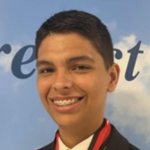
Isaac Rodriguez is a hardworking student from New Jersey who has developed a strong interest in science, healthcare, and writing. During high school, he was involved in academic activities and The Mile End NEHS chapter at Kearny High School, where he strengthened his passion for communication and learning. He is attending Caldwell University in the fall to study Medical Technology and pursue a future in the healthcare field. Outside of school, Isaac enjoys spending time with family, exploring modern technology, and working on creative writing projects. Known for his thoughtful personality and dedication, he looks forward to continuing his growth in college and beyond.

Jeanelle Peralta is a creative and driven student originally from the Philippines who now lives in New Jersey. From an early age, she developed a strong passion for art through drawing. During high school, that interest in art translated to performing in multiple bands, creative writing, and a passion for architecture. Jeanelle strengthened her artistic and academic skills through creative projects and personal exploration through The Mile End NEHS Chapter at Kearny High School. She is attending Pratt Institute in the fall to study Architecture and further develop her passion for design and innovation combined with artistic expression.
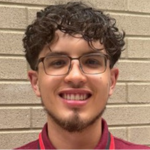
Mateo Santiago is a self-motivated and dedicated student from New Jersey who has explored a variety of extracurriculars, including French, architectural competitions, and various literary pursuits. Outside of school, he enjoys gardening, playing volleyball, and history. As a child, Mateo developed a passion for all things history through visits to historical landmarks, which has inspired both his interest in architecture and writing topics; he plans to pursue the former through higher education at the New Jersey Institute of Technology. Through his literary work, Mateo seeks to share stories that spark interest and reverence for historical traditions. As a member of the National English Honor Society, he strives to achieve this goal by spotlighting-both literary and metaphorical-cultural events, while engaging in literature authored by historically underserved communities.
National English Honor Society
The National English Honor Society (NEHS), founded and sponsored by Sigma Tau Delta, is the only international organization exclusively for secondary students and faculty who, in the field of English, merit special note for past and current accomplishments. Individual secondary schools are invited to petition for a local chapter, through which individuals may be inducted into Society membership. Immediate benefits of affiliation include academic recognition, scholarship and award eligibility, and opportunities for networking with others who share enthusiasm for, and accomplishment in, the language arts.
America’s first honor society was founded in 1776, but high school students didn’t have access to such organizations for another 150 years. Since then, high school honor societies have been developed in leadership, drama, journalism, French, Spanish, mathematics, the sciences, and in various other fields, but not in English. In 2005, National English Honor Society launched and has been growing steadily since, becoming one of the largest academic societies for secondary schools.
As Joyce Carol Oates writes, “This is the time for which we have been waiting.” Or perhaps it was Shakespeare: “Now is the winter of our discontent made glorious summer . . .” we celebrate English studies through NEHS.
National English Honor Society accepts submissions to our blog, NEHS Museletter, from all membership categories (students, Advisors, and alumni). If you are interested in submitting a blog, please read the Suggested Guidelines on our website. Email any questions and all submissions to: submit@nehsmuseletter.us.
